

Cupping Therapy in Denver
Lift the restriction. Feel the release.
Cupping therapy in Denver for athletes and active people who need more than pressure alone. Where massage presses down into muscle, cupping pulls tissue upward, separating fascial layers and drawing fresh circulation into areas of chronic tightness.
Quick facts
What is it?
Negative Pressure, Positive Results.
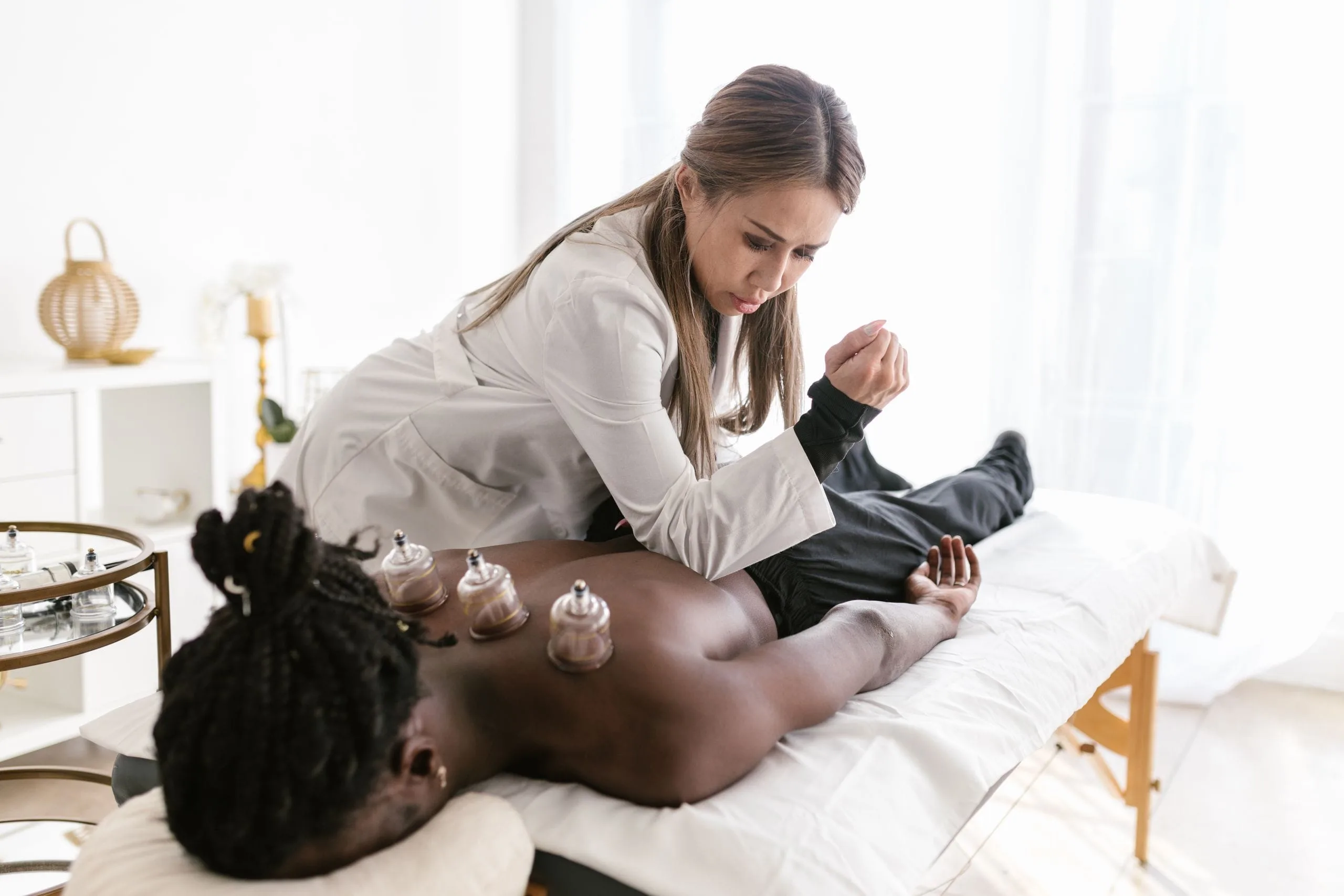
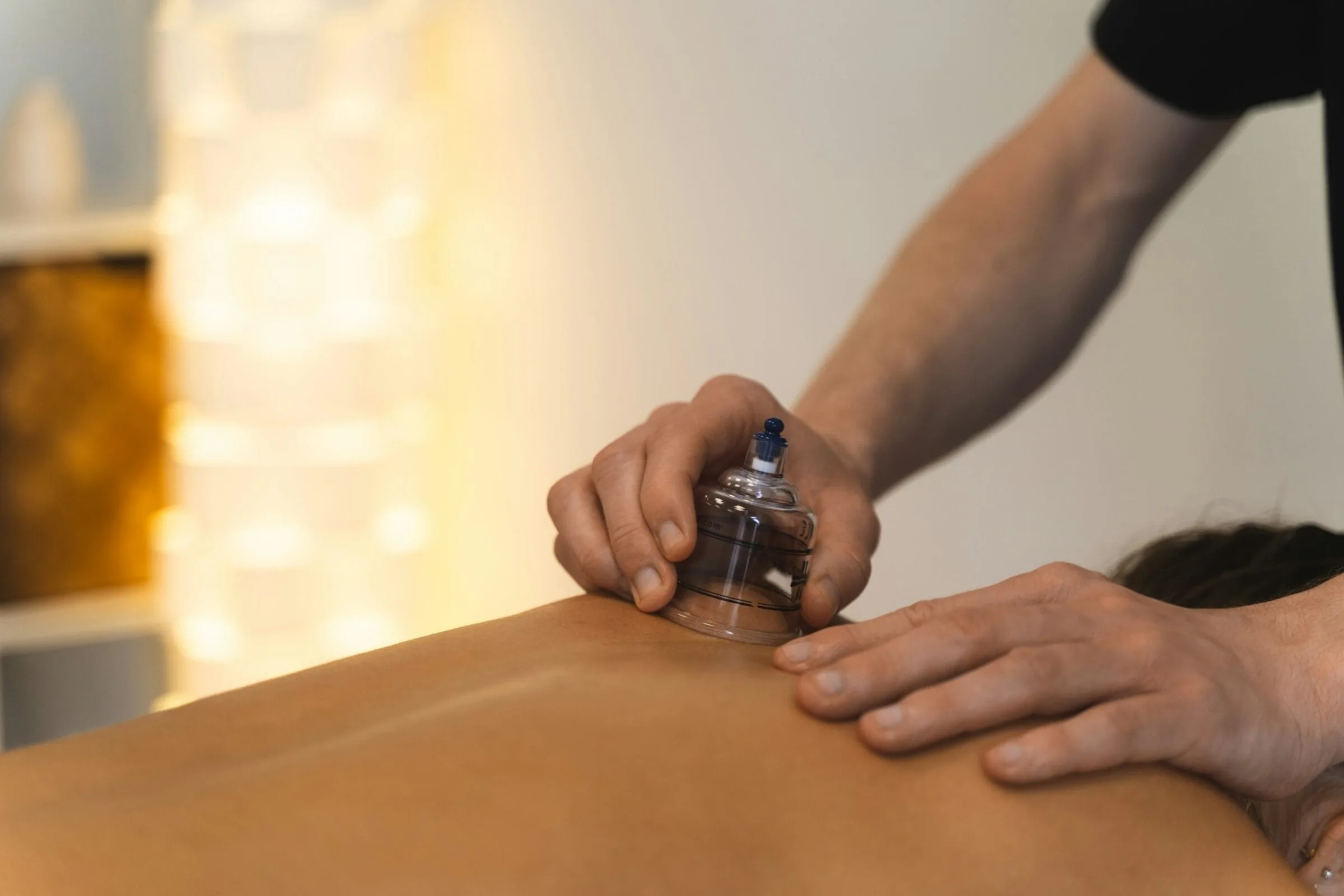
Cupping places silicone or glass cups on the skin and removes the air inside them. The suction draws skin, superficial fascia, and underlying muscle upward into the cup. That decompression is the whole point. It creates space in tissue that compression-based techniques can’t reach the same way.
The effects are well documented: more local blood flow, better lymphatic drainage, separation of stuck fascial layers, and quieter pain signaling. In stubborn areas like the upper traps, thoracic paraspinals, IT band, and hip rotators, cupping often gets movement out of tissue that hasn’t fully responded to direct pressure.
At Denver Sports Massage, massage and cupping work together in a single session. Your clinician applies cups where the assessment shows the most restriction, then follows with hands-on work while the tissue is primed.
Who it helps
Where Cupping Massage Works Best
Chronic Upper Back and Trap Tension
The upper traps, rhomboids, and thoracic paraspinals respond unusually well to cupping. A few minutes of static cups over the upper back can decompress tissue that hours of direct pressure never quite release.
Post-Training Recovery
Cupping supports the clearance of metabolic by-products from hard-worked muscle. Applied 12 to 24 hours after a heavy session or event, it can help reduce soreness and shorten recovery time.
IT Band and Hip Restriction
The lateral thigh is too dense to respond well to compression. Sliding cups along the TFL and IT band improve mobility in ways foam rolling rarely matches.
Lower Back Tightness
Static cups placed along the lumbar paraspinals bring immediate decompression and blood flow to an area that tends to hold tension without fully letting go.
Post-Surgical Scar Tissue
Once incisions are fully healed and your physician has cleared you, cupping can help address the fascial adhesions that form around surgical sites.
General Wellness and Circulation
No specific complaint required. Many clients add cupping periodically and leave feeling looser and more mobile.
What to expect
Your Session, Step by Step
Assessment and Planning
Your clinician palpates the target areas, decides where cups will help most, and explains the temporary marking.
Application
Cups go on and you feel a strong pulling sensation. Not painful, just different. Intensity is adjusted to your tolerance.
Treatment
Cups are held in place or slid along the tissue. Most clients find this phase relaxing once the sensation settles.
Hands-On Integration
After the cups come off, your clinician works the treated areas manually while the tissue is at its most responsive.
Some Restrictions Need to Be Lifted, Not Pushed
If you have areas of chronic tightness that haven’t fully released with massage alone, cupping may be the approach that makes the difference. Mention your interest when you book and your clinician will assess and build it into the session.
How we use it
Part of Your Massage Session, Not a Separate Booking
Cupping at DSM is assessment-guided, never a default add-on. Your clinician chooses between static cups, held over a specific restriction for five to ten minutes, and sliding cups moved along oiled skin to cover broader regions like the posterior leg. Cups usually go on first; hands-on work follows on the same tissue, because the sequence produces a more complete release than either approach alone.
There’s no extra charge and no separate appointment. Just mention cupping when you book. If you want traditional fire cupping, our acupuncture team offers it within acupuncture sessions.
Common questions
Cupping Therapy FAQs
Are the Marks Painful?
No. The circular marks reflect stagnant blood drawn to the surface, not damaged tissue, and they aren’t tender the way a bruise is. They fade within three to seven days.
How Long Does Cupping Last in a Session?
Typically 5 to 15 minutes of cup time within a broader massage. Cups work one area while your clinician treats others by hand.
Is Cupping Safe?
Yes, when performed by a trained clinician. It’s avoided over active skin infections, open wounds, sunburn, and with clotting disorders or blood thinners; protocols are modified during pregnancy. Share your full health history before your session.
Can I Get Cupping Close to a Race or Event?
Skip static cupping within 48 hours of an event where marks matter. Sliding cupping leaves fewer and works closer to race day. For recovery, cupping helps most 12 to 24 hours after the effort.


“Logan was great. I came in with zero expectations but what he did was something I did not expect. I’m used to a deep tissue massage just having someone crank at your knots with lots of pressure. But he somehow removed tension by moving my back muscles around without having to just “crank” at my back. I’ll be back.”
Simon Golub · Google Review
“Amazing massage experience!! Jyoti really listens and provides great advice!”
Dan Kuroiwa · Facebook Review
“All I can say is Gabriel is amazing. He has hands of gold and if you’re in pain and need help, he’s the guy. Absolutely love him!”
Kelly Andrews · Google Review

DECOMPRESSION WORKS DIFFERENTLY
Ready to Experience Cupping?
If you’ve been searching for cupping therapy near Greenwood Village or south Denver, your first session includes a full assessment and targeted cupping at no extra charge.
Not sure what service to book? Call us, we’ll help you figure it out.
Explore More
Related Services
Deep Tissue Massage
Decompression first, then compression, for a more complete fascial release in one session.
Sports Massage
Addresses the metabolic congestion and fascial restriction that build with sustained training load.
Myofascial Release
Treats fascial restriction through sustained pressure where cupping uses decompression.
Fire Cupping
The traditional version, offered by our acupuncture team within acupuncture sessions.
