

Calf Pain Massage in Denver
The calf takes the full force of every step.
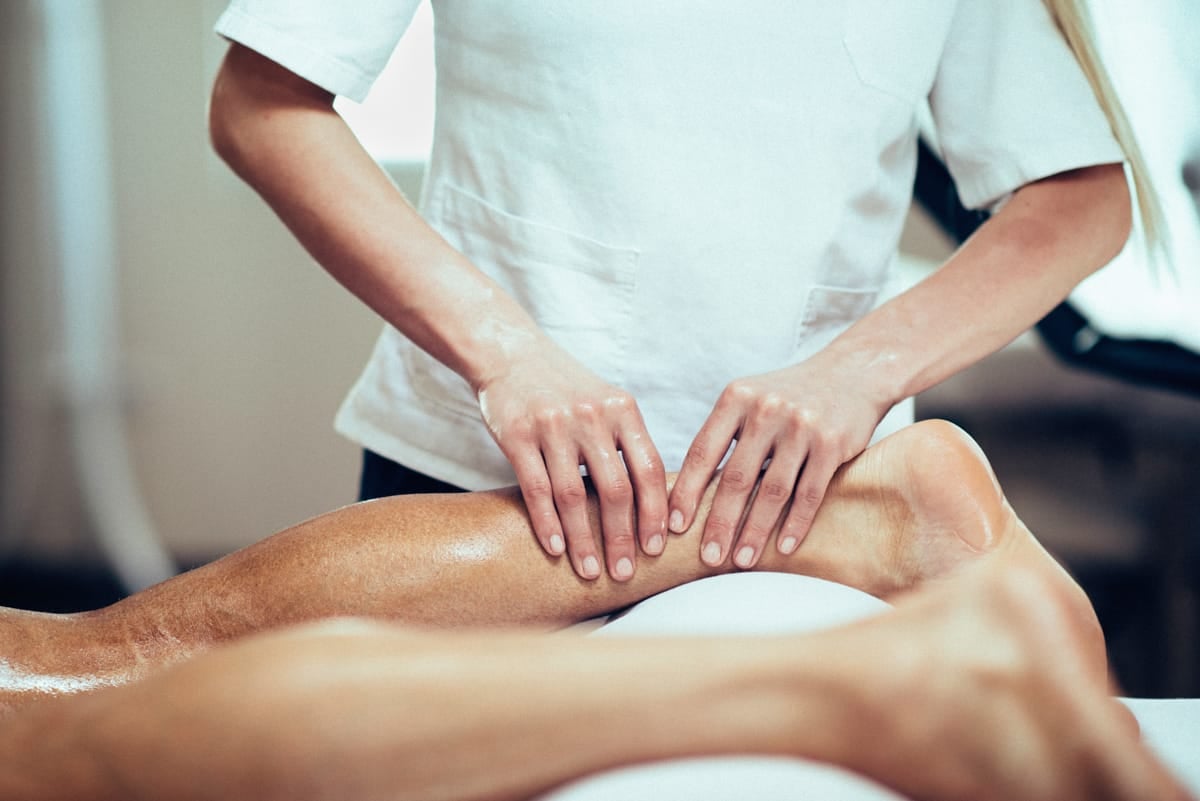
Calf pain massage in Denver for runners, hikers, and anyone whose lower legs are working harder than they can recover. At Denver Sports Massage in Greenwood Village, we start by finding out what is actually driving the pain: a strain, a tendinopathy, or plain cumulative overload. Then we treat that specific structure with deep tissue and trigger point work.
Calf pain at a glance

What we treat
Why calves break down
The calf complex works harder per step than most people realize. The gastrocnemius and soleus power every stride, and the Achilles tendon alone handles forces of six to eight times body weight during running. Colorado adds its own load: altitude running, trail hiking, and constant elevation change ask more of the calf and Achilles than flat-terrain training ever does.
When training load exceeds recovery capacity, these structures fail in predictable, well-understood ways. That predictability is good news. A clinician who assesses the calf specifically, rather than generically, can usually identify the problem quickly and treat it directly.
Common conditions
Common causes
of calf pain
💥 Calf strains
An acute gastrocnemius tear from explosive loading is the classic “tennis leg.” Soleus strains build more quietly, usually from sustained endurance effort. Calf strain massage in the subacute and remodeling phases supports recovery quality and can reduce re-injury risk, which matters because a poorly healed strain tends to tear again.
🦶 Achilles tendinopathy
The most common running injury in the lower leg. Mid-portion Achilles pain sits two to six centimeters above the heel and responds well to instrument-assisted soft tissue work (IASTM) on the tendon and surrounding calf. Insertional Achilles pain at the heel attachment needs a modified approach that avoids compressing an already-compressed insertion. The two are different problems, and treating them the same way is a common reason recovery stalls.
🦴 Shin splints (MTSS)
Medial tibial stress syndrome is diffuse pain along the inner shin, driven by the soleus and tibialis posterior pulling on the tibial periosteum. Soft tissue work on the deep posterior compartment, combined with sensible load management, tends to resolve it faster than rest alone.
🔁 Chronic calf tightness
If your calves are tight after every run and the tightness is building rather than resolving, the tissue is accumulating load faster than it recovers. That pattern precedes most calf and Achilles injuries, which makes tight calf massage a preventive measure, not just a comfort one.
Our approach
What massage for
calf pain involves
Your session starts with assessment: single-leg heel raises and loading tests, palpation of the muscle bellies and tendon, and tendinopathy staging where relevant. Reactive tendinopathy needs load reduction while treatment occurs; degenerative tendinopathy needs specific loading to drive remodeling. Getting that distinction right shapes the whole treatment plan.
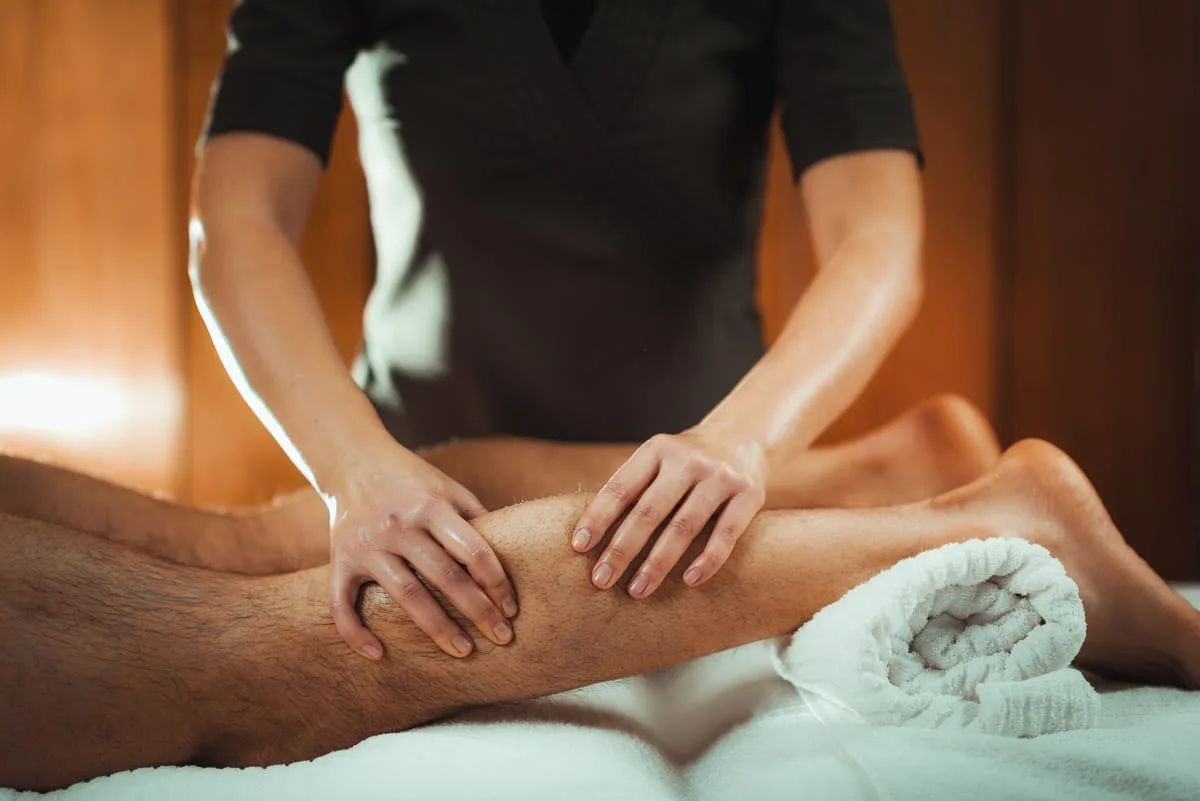
Treatment is matched to the finding. Calf muscle pain massage at DSM typically combines deep tissue work on the gastrocnemius, soleus, and deep posterior compartment with trigger point therapy, IASTM for tendon involvement, and cupping for post-strain recovery and the fascial restriction that comes with high training loads. You also leave with return-to-activity guidance, because soft tissue work without addressing the load pattern that caused the injury invites recurrence.
Before you book
When to see
a doctor first
Sudden severe calf pain with swelling can indicate a DVT; call your doctor immediately. A palpable gap in the Achilles tendon or inability to bear weight after an acute injury also warrants medical evaluation before booking. For everything else, an assessment at DSM is an appropriate first step, and we refer for imaging when findings indicate it.
Start with an assessment
Get a treatment plan built around your body, your training, and your schedule.
FAQ
Calf pain massage
questions
Why do my calves get so tight after running?
Persistent post-run tightness usually reflects a mix of cumulative myofascial tension, inadequate recovery between sessions, and normal tissue adaptation to training load. If it resolves between runs, manage your training load. If it is building progressively, book an assessment before it becomes an injury.
How long does Achilles tendinopathy take to resolve?
Reactive Achilles tendinopathy from an acute overload can settle in four to eight weeks with appropriate treatment and load management. Degenerative tendinopathy that has been present for months or years typically needs three to six months of consistent treatment and graduated loading. Staging at your first session sets a realistic timeline.
Can I keep running with shin splints?
It depends on severity. Mild MTSS often tolerates a modified training load while treatment occurs. Pain at rest, pain that worsens during a run, or a stress reaction on imaging calls for a bigger training reduction. Your clinician will give specific guidance based on your assessment.
Is a calf strain the same as a torn Achilles?
No. A calf strain is a muscle injury in the gastrocnemius or soleus. A ruptured Achilles is a structural failure of the tendon, produces a palpable gap and immediate inability to push off the foot, and is a medical emergency. If you suspect a rupture, seek emergency care right away.
Ready to run without
that nagging calf?
Maybe it is a strain that never fully resolved, or an Achilles that flares every training block. A structure-specific assessment gets you further than rest and guesswork. Book your session online or call (303) 630-9603.
Not sure what service to book? Call us, we’ll help you figure it out.
