

Knee Pain Massage in Denver
Your knees carry everything you do.
We help lighten the load.
Deep tissue and trigger point massage for knee pain, from licensed therapists who look at how your whole leg is loading the joint.
Knee pain at a glance
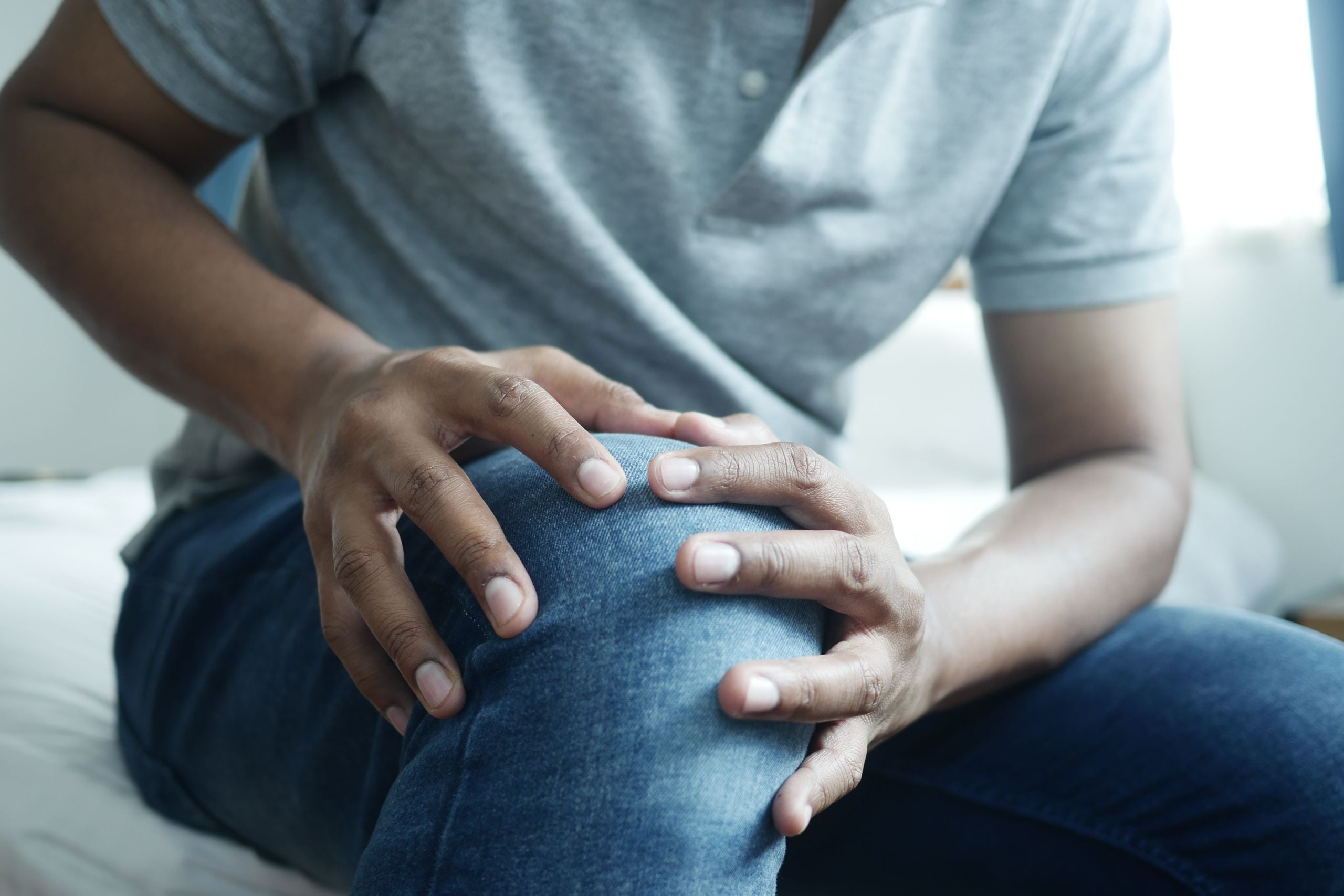
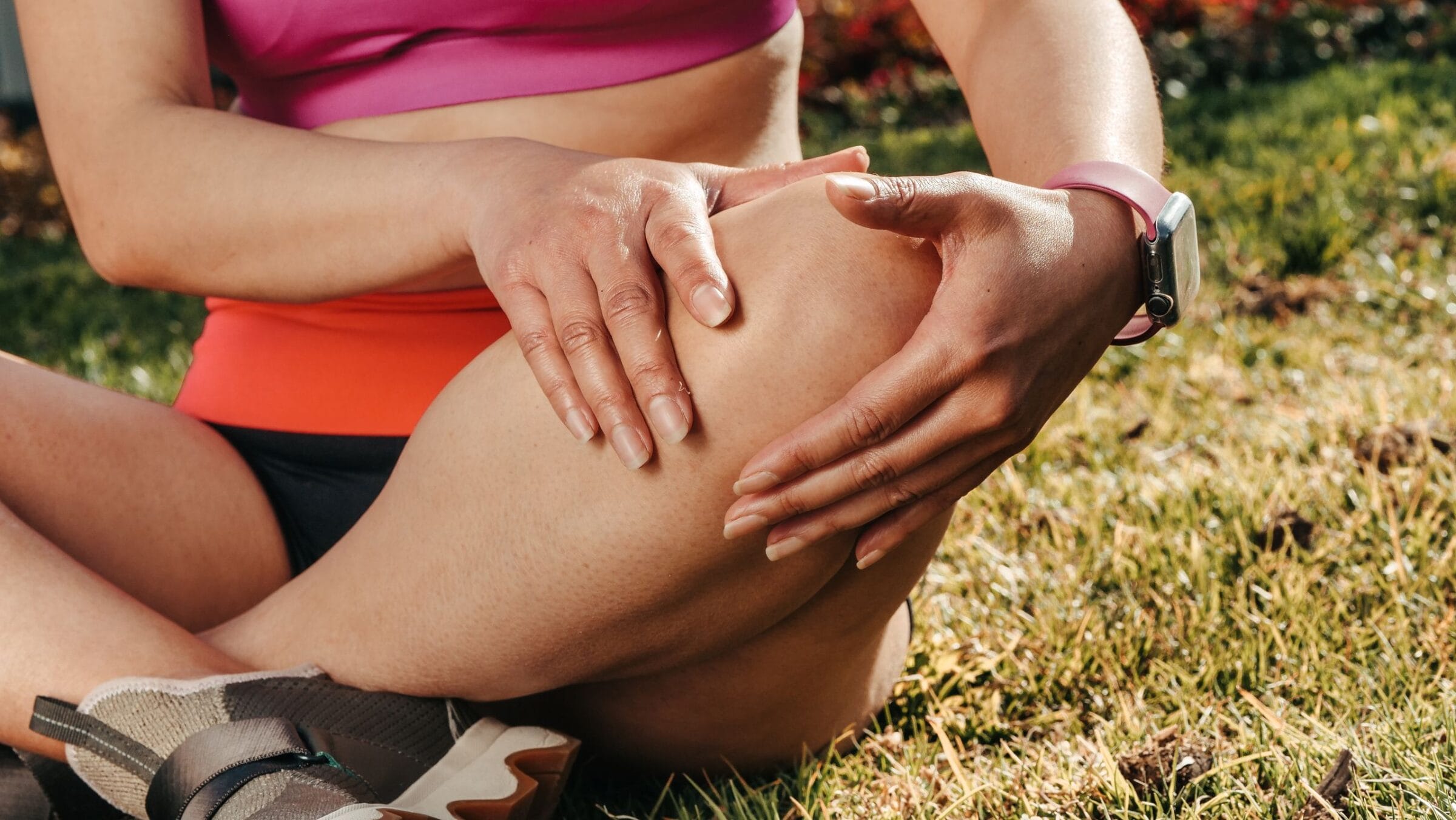
Understanding knee pain
Where knee pain comes from
Knee pain rarely starts in the knee itself. The joint is a hinge caught between your hip and your ankle, and it depends on the muscles around it (quads, hamstrings, calves, IT band) to track straight and absorb load. When those tissues tighten or fatigue, the joint takes strain it was never built to carry. That’s why knee pain massage in Denver works best when it treats the soft tissue around the joint, not just the spot that hurts.
Common causes we see at the clinic
🏃 Overuse
Repetitive stress from running, cycling, or jumping can irritate the tendons around the kneecap and lead to runner’s knee or patellar tendonitis.
💥 Injury
A sudden twist or impact can sprain or strain the ligaments and muscles that stabilize the joint.
🎯 Tracking problems
When the muscles around the knee pull unevenly, the kneecap drifts off line and the joint wears in ways it shouldn’t.
⏳ Arthritis and age
Cartilage thins over time and tissues lose elasticity, so the joint gets more sensitive to load.
Knee pain can be acute, starting with a specific moment, or chronic, creeping in over months. Soft tissue work can help with both, though the treatment plan looks different for each.
How it works
How massage for knee pain helps
Massage doesn’t treat the joint surfaces directly. What it can do is change the environment the joint works in. Releasing tight quads, hamstrings, and calves reduces the compressive strain on the knee. Better circulation supports recovery in irritated tendons. And clearing trigger points in the surrounding muscle can quiet pain that refers into the joint, restoring range of motion you may not realize you’d lost.
Runner’s Knee
Runner’s knee massage focuses on the quadriceps and the IT band, the tissues that most often pull the kneecap off track. Loosening them can reduce the grinding, aching pain under the kneecap that shows up on long runs and stairs.
Patellar Tendonitis
Patellar tendonitis massage works the quads and the tissue around the patellar tendon to reduce the load passing through it. It’s a common request from jumping athletes and anyone whose training volume climbed faster than their tendons could adapt.
IT Band Issues
Pain on the outside of the knee often traces back to tension through the IT band and the hip muscles that feed it. We work the full chain, hip to knee, rather than digging at the sore spot alone.
Your first visit
What to expect
at your session
Every visit starts with an assessment. Your therapist watches how your knee moves, checks the tissues around it, and asks about your training and history.
Assessment
We find what’s actually driving the pain, which is often upstream or downstream of the knee.
Targeted Treatment
Deep tissue, trigger point therapy, and myofascial release applied where the assessment points, at a pressure that works for you.
Education & Self-Care
You leave knowing what we found and what to do between sessions to keep progress moving.
Start with an assessment
Get a treatment plan built around your body, your training, and your schedule.
Why us
Why Denver Sports Massage
Our licensed clinicians are selectively hired and trained across 20+ modalities, so your plan is built around your knee rather than a set menu. Clients across the South Denver metro have rated us 4.9 on Google over 350+ reviews, and most of them came in the same way you might: with a knee that was getting in the way of something they love.
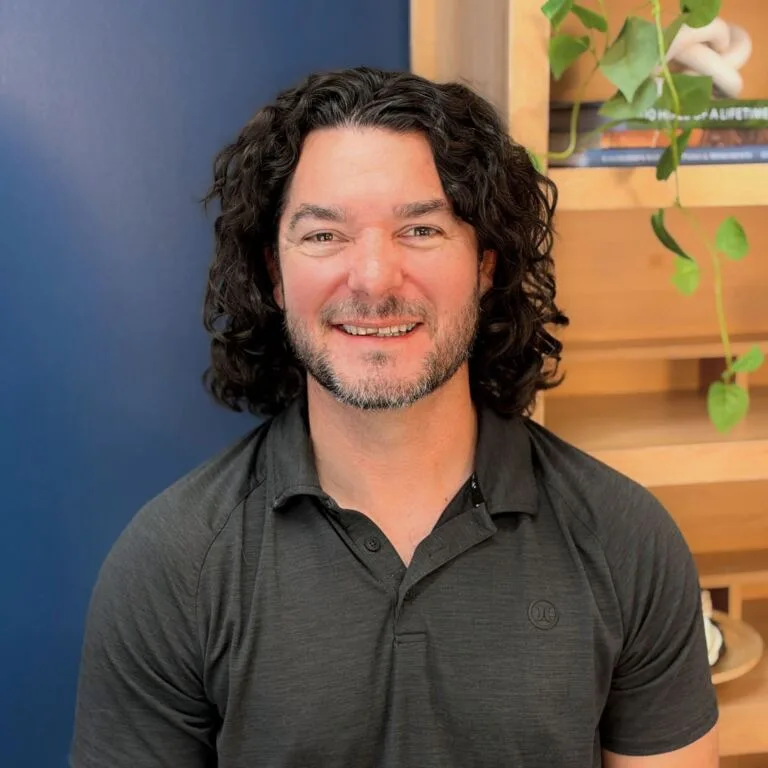
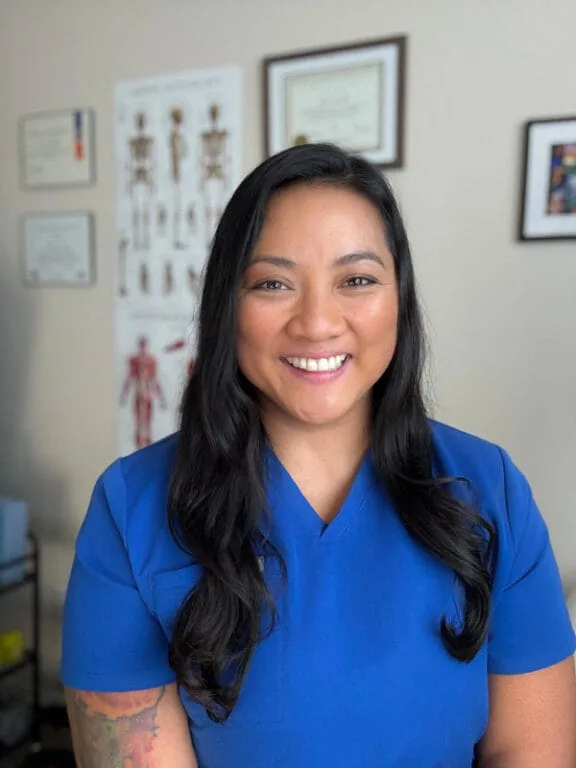
Jyoti Jason-Miller
Owner, LMT, BCMT Associate of Ocupational Studies (AOS), Orthopedic and Rehabilitation Specialist


Dr. Ryan Taves
D.Ac, L.Ac, Dipl. Ac. (NCCAOM)®, BA Health Psychology, NPTI-PFT, Herbal Medicine & Integrative Health Certification
FAQ
Knee pain massage FAQs
Can massage really help knee pain?
Often, yes. Much knee pain is driven by tight or overworked muscles and tendons around the joint, and those tissues respond well to skilled soft tissue work. Massage supports recovery and can reduce pain, though structural injuries like ligament tears need medical care alongside it.
Is massage good for runner’s knee?
It can be. Runner’s knee is frequently linked to tension in the quads and IT band pulling the kneecap off track. Releasing those tissues, paired with the self-care your therapist shows you, can ease pain and help you return to training.
What type of massage is best for knee pain?
Deep tissue and trigger point techniques tend to be most effective, because they reach the dense muscle and connective tissue that influence the knee. Your therapist will choose based on your assessment rather than a one-size-fits-all protocol.
How many sessions will I need?
It depends on how long the problem has been building. Some clients feel a clear difference after one visit; chronic patterns usually take a short series plus the between-session work we teach you. Your therapist will give you an honest read after your first assessment.


“Outstanding service and professional as well. I was dealing with hip/quad pain for YEARS… after one session with Sarrut, I was able to squat pain free. I can’t even begin to tell you how amazing it felt! Thank you for everything!”
Yaël Saint-Armand · Facebook Review
“Sasha at Denver Sports Massage is awesome — she has been receptive to my needs and really listens to what I need to get me active again!”
Shelly Kurach · Google Review · Verified
“Absolutely the best! Listened to my situation and was logical in her approach to treating me. Went well beyond what I anticipated to help me understand the nature of my ailments and what can be done to help me with practical exercises.”
Dave Conner · Google Review · Verified

Ready to bend, squat, and run
without wincing?
Book with a therapist who treats knees for a living, at our Greenwood Village clinic serving the South Denver metro.
Not sure what service to book? Call us, we’ll help you figure it out.
