

Kyphosis Massage in Denver
Rounded shoulders don’t have to mean a stiff, aching upper back.
Kyphosis massage in Denver from clinicians who assess your posture before they touch a table. We treat the muscle tension behind excessive thoracic rounding at our Greenwood Village clinic, and much of that tension responds well to skilled hands.
Kyphosis at a glance
What kyphosis is
How Kyphosis Overloads Your Upper Back
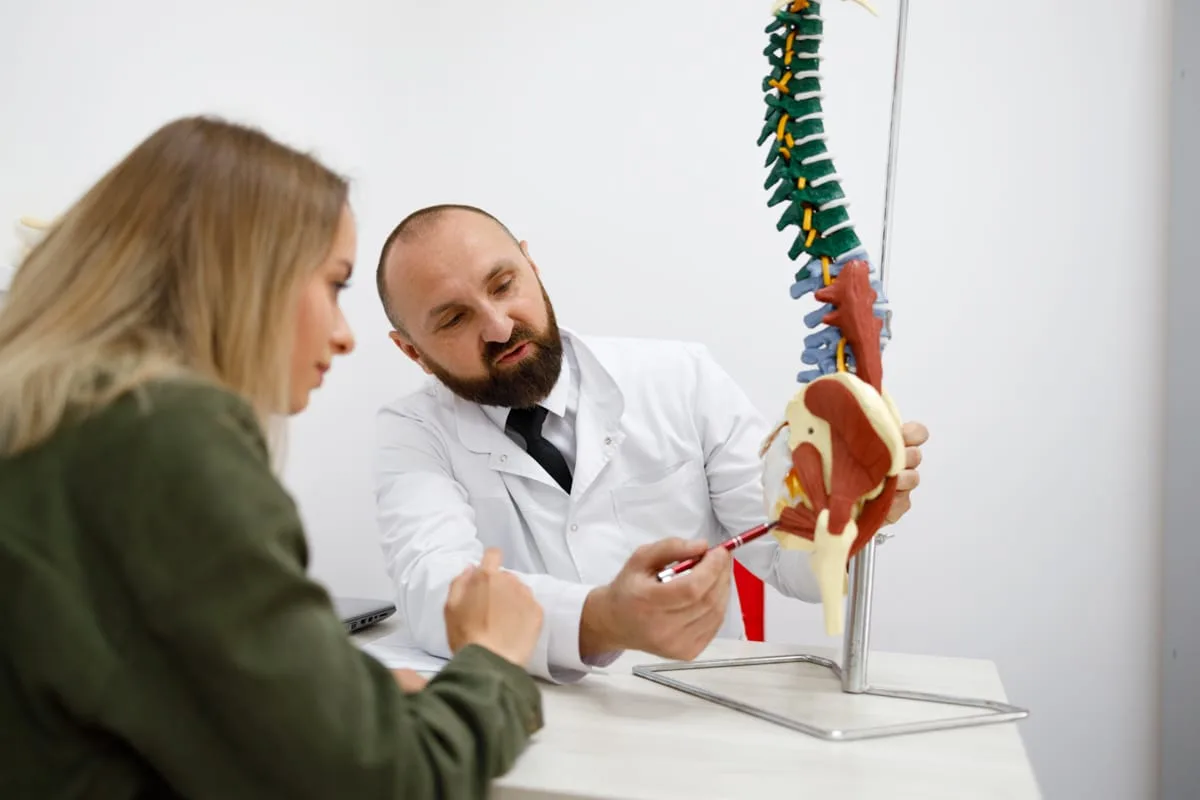
Kyphosis is an excessive forward curve of the thoracic spine, the rounding of the upper back people often call hunchback posture. It sits on a spectrum. Postural kyphosis is driven by habit and muscle weakness and is largely reversible. Structural kyphosis, which includes vertebral wedging, Scheuermann’s disease, and osteoporotic compression fractures, is not something soft tissue work can undo.
For most clients, the useful question is how much of the rounding is postural and how much is structural. The postural share is the part massage for kyphosis can reach, and in our experience it is usually a bigger share than people expect.
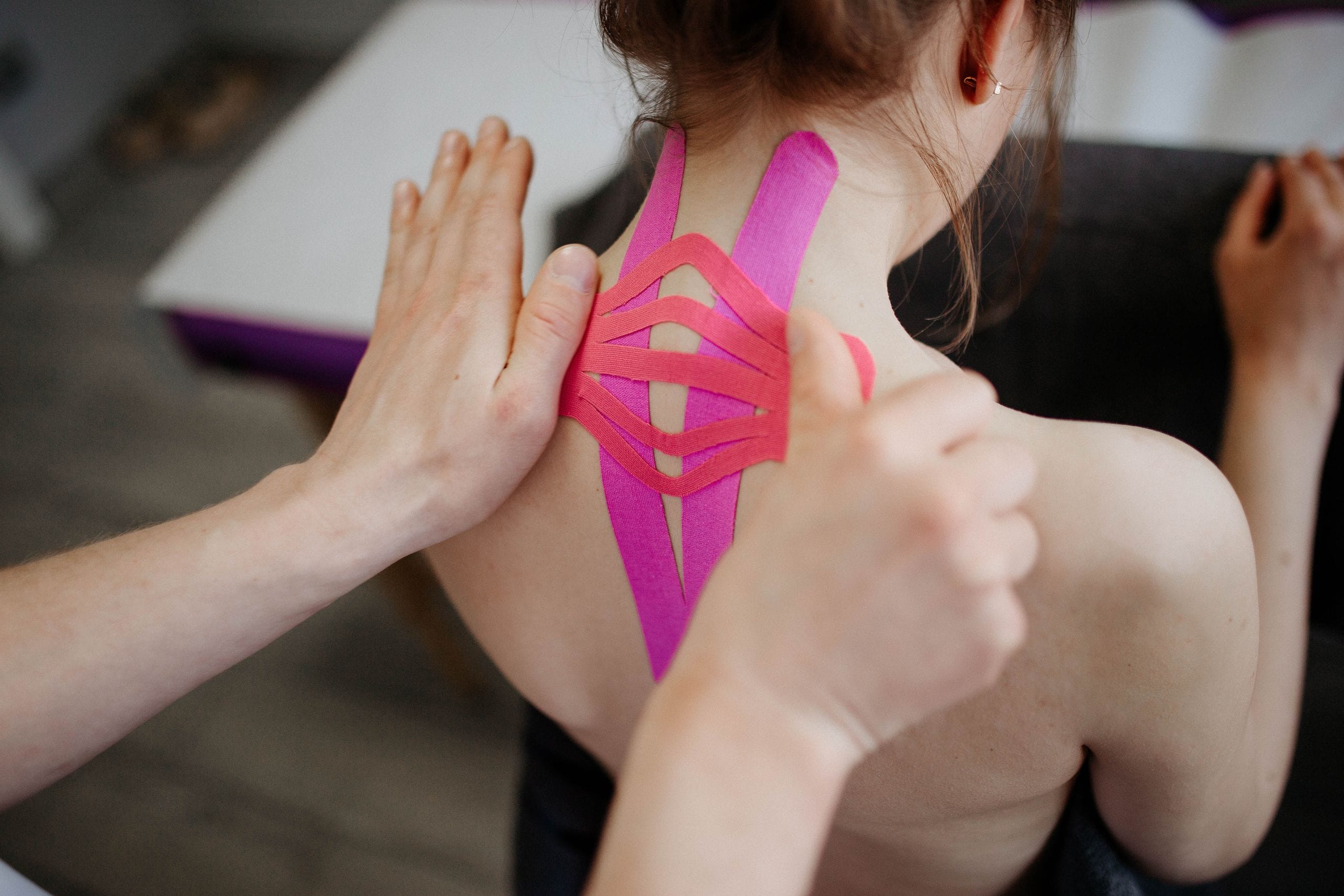
The muscle pattern is remarkably consistent. The pectorals and the muscles at the front of the shoulder girdle shorten and pull the thorax forward. The rhomboids, lower trapezius, and thoracic erectors on the back get long, weak, and overworked at the same time. That tug-of-war produces the chronic upper back ache, restricted shoulder movement, and headaches that start at the base of the skull.
Our approach
Kyphosis Correction Massage:
Where We Work
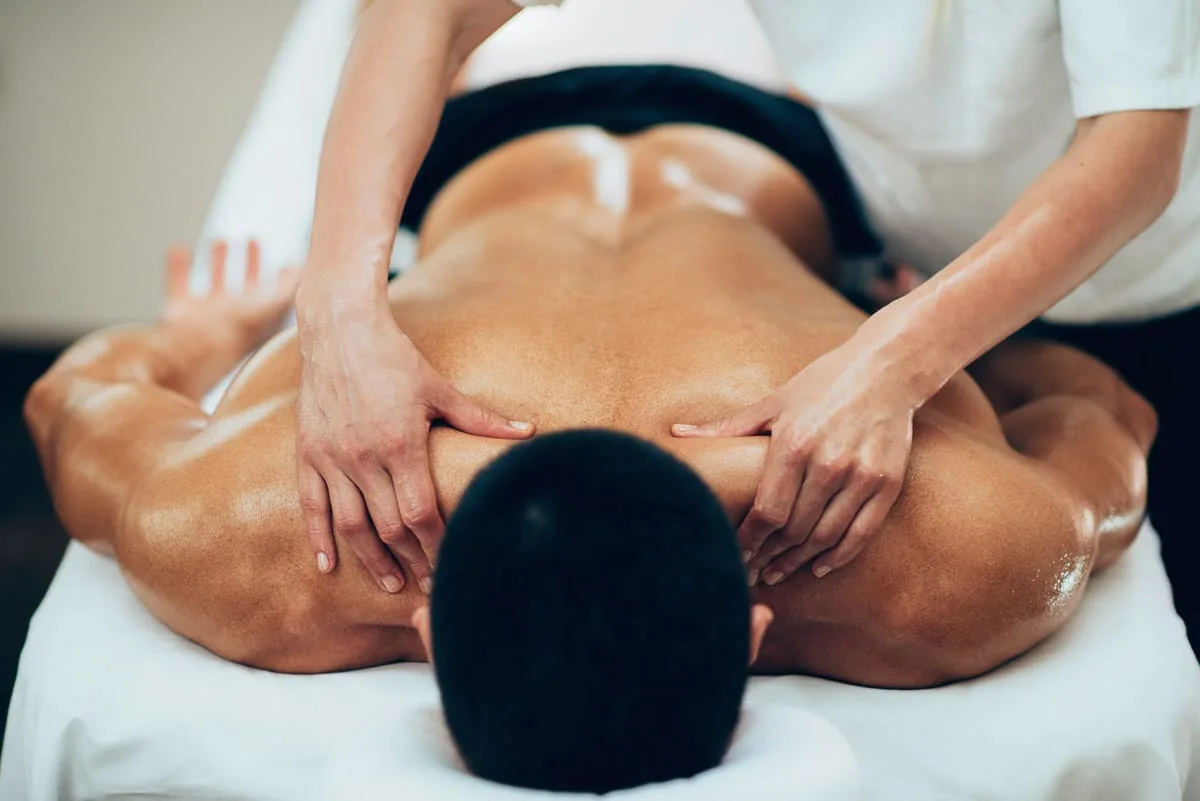
Most massage for a rounded upper back goes straight to where it hurts. Ours starts where the problem lives: the front of your body. Kyphosis correction massage at DSM releases the shortened pectorals, coracobrachialis, and anterior scalenes that are pulling you forward, then deactivates the trigger points in the overloaded muscles along your spine.
Releasing tight tissue is only half of postural correction. The lengthened posterior muscles need strengthening to hold your new range, so we send you home with specific activation work for the rhomboids and lower traps. Postural correction massage plus that home program is what actually moves the needle on how you carry yourself.
What to expect
Your First Session,
Step by Step
Postural Assessment
We observe your standing and seated posture, screen shoulder and thoracic mobility, and palpate the chest, shoulder girdle, and upper back to map what is short, what is weak, and what is generating pain.
Targeted Treatment
Deep tissue work and myofascial release through the anterior chest and shoulders, with trigger point work in the upper back. The treatment follows the assessment findings rather than a set routine.
Home Guidance
Stretches for the shortened front-side muscles, activation cues for the inhibited back-side muscles, and practical posture advice for desk work and training. This is where session gains turn into lasting change.
Your care team
Working Alongside
Your Other Providers
If a physical therapist, chiropractor, or physician is managing your kyphosis, our work complements theirs. They handle joint mechanics, medical management, and exercise rehab; we handle the soft tissue layer those approaches can’t directly reach. Bring any imaging or reports to your first visit, and you don’t need a referral to book.
“Logan was great. I came in with zero expectations but what he did was something I did not expect. I’m used to a deep tissue massage just having someone crank at your knots with lots of pressure. But he somehow removed tension by moving my back muscles around without having to just “crank” at my back. I’ll be back.”
Simon Golub · Google Review
FAQ
Frequently Asked Questions
About Kyphosis Massage
Can massage correct my kyphosis?
Massage can meaningfully improve the postural component, which for many people is most of the visible rounding. It cannot change vertebral wedging or other structural causes. Realistic goals are less rounding, less aching, and freer shoulder movement.
Is massage safe if I have Scheuermann’s disease or osteoporosis?
Yes, when your clinician knows about it. Osteoporosis in particular calls for modified pressure and positioning, so disclose your diagnosis, any imaging, and your other providers at intake.
How often should I come in?
Weekly or bi-weekly sessions produce the fastest improvement during a painful stretch. Once things settle, monthly maintenance usually holds the gains, especially if you keep up the home program.
Why do you work on my chest when my back hurts?
Because the shortened chest muscles are what pull your upper back into the round. The back muscles ache from fighting that pull all day. Release the front and the back finally gets to relax.
Related conditions
You Might Also Find Useful
Scoliosis
Sideways spinal curvature has its own muscle pattern; see our scoliosis massage page.
Lordosis
Excessive lower back curve, often paired with upper back rounding.
Orthopedic Massage
Assessment-led massage built for structural and postural presentations.

Ready when you are
Ready to Stand Taller and Ache Less?
Not sure what service to book? Call us, we’ll help you figure it out.
