

Neck Pain Massage in Denver
A stiff neck shouldn’t run your day.
Neck pain makes ordinary things harder than they should be, from checking a blind spot to sleeping through the night. If you’re looking for neck pain massage in Denver, you don’t have to diagnose yourself first. Whether it started at a desk, in a car accident, or during a stressful season, our clinicians assess what’s driving it and treat that.
Neck pain at a glance


Understanding neck pain
Why your neck stays tight
The neck is the most posturally loaded part of the spine. Hold your head forward of your shoulders for hours, the way most desk work encourages, and the neck extensors and upper trapezius work overtime while the deep stabilizing muscles switch off. This pattern is one of the most common drivers of neck pain and tension headaches we see.
Stress compounds it. Under chronic stress, the nervous system keeps certain muscles in a braced, protective state, most commonly the neck, upper back, and jaw. It’s a real, measurable muscular phenomenon, and it’s why a tense week so often shows up as a stiff neck.
Whatever the mix in your case, neck pain that persists usually means the driver hasn’t been found yet.
Common causes
Common causes of neck pain and tension
💻 Desk strain and tech neck
Sustained forward-head posture chronically overloads the neck extensors, upper trapezius, and deep cervical flexors. A targeted tech neck massage helps release the overworked muscles, and small workstation changes help keep them from tightening right back up.
😣 Stress-held tension
Braced shoulders and a clenched jaw can persist for weeks after the stressful stretch has passed. The tissue stays guarded until something interrupts the pattern.
🚗 Whiplash and old neck injuries
The rapid acceleration of a rear-end collision can strain cervical muscles and ligaments that then guard for months. Even years later, an injury that was never fully treated can leave restriction and altered movement behind.
🦴 Joint restriction and referred symptoms
Stiff facet joints and cervical disc changes alter how force moves through the neck, sometimes referring symptoms into the shoulders and arms as aching or tingling rather than local pain.
How we treat it
Massage for neck pain,
chosen after assessment
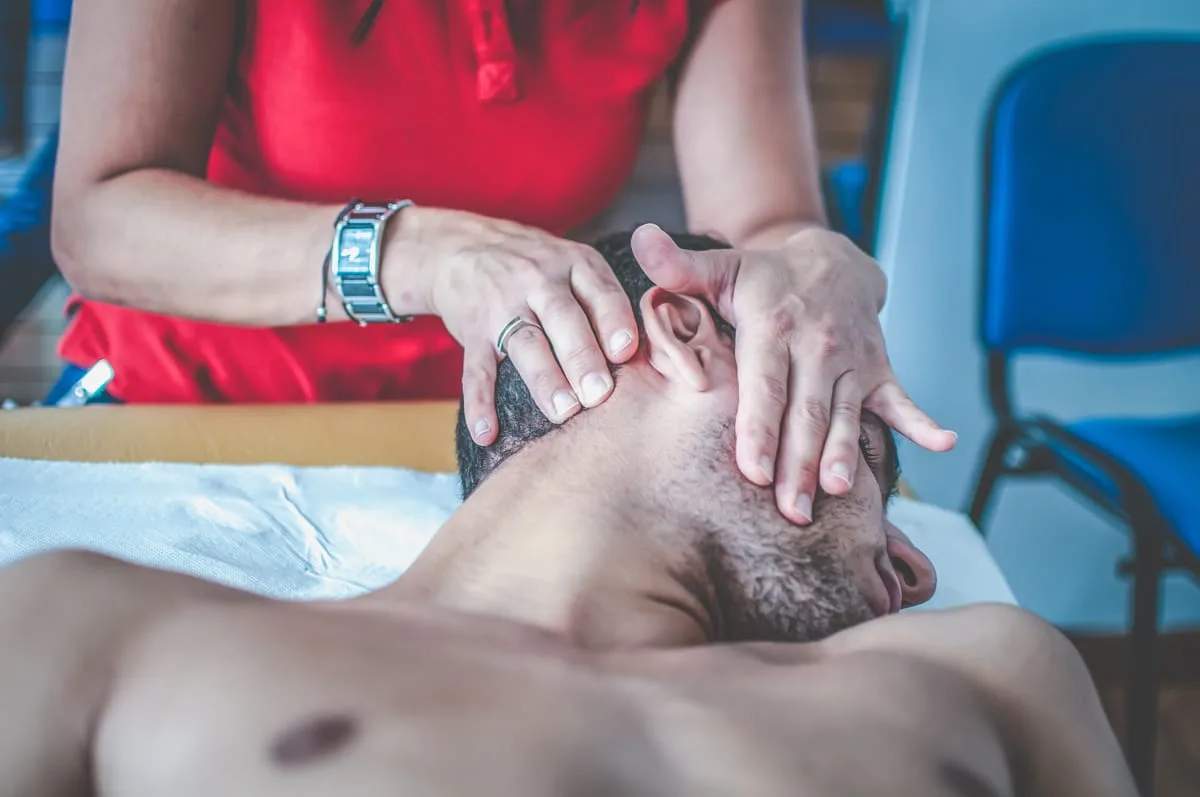
The neck rewards precision more than pressure. For acute or highly sensitized presentations, trigger point work and passive positional release neurologically reset overactive muscles with little to no pressure at all. Neuromuscular therapy is the tool of choice when a neck or shoulder muscle refers symptoms down the arm.
For chronic desk-related holding, neck tension massage leans on slow deep tissue and myofascial work through the upper traps, levator scapulae, and suboccipitals. Acupuncture earns its place too, especially for stress-held tension, headaches, and long-standing cases where soft-tissue work alone isn’t creating enough change.
Every session is run by a licensed therapist experienced in cervical pain massage, and depth is calibrated to your comfort throughout.
“I’ve been coming here for over a year and every single session has been exceptional. The therapists are knowledgeable, attentive, and genuinely care about your wellbeing.”
Jamie T. · Google Review
What to expect
What your first session
looks like
Your first visit starts with a history and a movement screen: how far your neck rotates, what shoulder position does to your symptoms, and where the restriction actually lives. Treatment follows what the screen shows rather than a preset routine.
Afterward comes a debrief covering what was found, what changed, and what to do between visits, often small desk-setup and mobility adjustments that protect the work done on the table. You’ll also leave with a realistic sense of how many visits your situation calls for.
Start with an assessment
Get a treatment plan built around your body, your training, and your schedule.
FAQ
Frequently asked questions
about neck pain massage
Do I Need to Know Which Service to Book?
No, and we hear this question a lot. Book any appointment, describe what’s going on, and your clinician will determine the right approach during the assessment. If a different technique would serve you better, we’ll tell you and adjust the session on the spot.
Can Massage Help With Tech Neck?
Yes. Hands-on work helps relieve the overloaded extensors and upper traps that forward-head posture creates. Lasting change usually takes both pieces: releasing the tissue and adjusting the habits that load it, which is exactly what we cover in your post-session debrief.
Will Neck Work Hurt?
Therapeutic work on long-tight tissue can involve some discomfort, but we calibrate pressure to you and keep the conversation open throughout. The neck also responds well to low-pressure techniques, so depth is never the only option. If something doesn’t feel right, say so and we adjust immediately.
Can Massage Help After Whiplash?
Once your doctor has cleared you for soft-tissue work, massage can help ease the muscular guarding and restriction that linger after a whiplash injury. Mention the accident and its timeline when you book so your clinician can plan the session appropriately for your stage of recovery.

Ready to turn your head
without wincing?
You bring the symptoms; we bring the assessment, the training, and the plan. Most clients notice a change after the very first session.
Not sure what service to book? Call us, we’ll help you figure it out.
