

Post-Event Sports Massage in Denver
You finished. Now recover properly.
The race is done. What happens in the next 24 to 72 hours decides how quickly you’re back to full training, how much soreness you carry through the week, and whether your next block starts fresh or grinds through accumulated damage. Post-race recovery massage speeds up every part of that, and it’s a fundamentally different session from anything you’d book mid-training.
What happens after a hard effort

The recovery science
What Your Body Is Doing After You Finish.
Delayed onset muscle soreness peaks at 24 to 72 hours and is driven by inflammatory mediators, microstructural muscle damage, and accumulated metabolic byproducts. It’s a normal and necessary part of adaptation, but its duration and severity are not fixed. Manual therapy in the 24 to 48 hour window directly influences how fast those processes resolve.
Circulatory and lymphatic strokes speed the removal of waste products and reduce interstitial fluid in loaded tissue. Gentle compression and effleurage improve venous return and cut the congestion that amplifies soreness. Light myofascial work addresses the fascial restrictions that form quickly around heavily worked areas, before they become the entrenched holding patterns that limit the first weeks of your next block.
It’s also diagnostic: a clinician working on you 24 to 48 hours after a race can spot tissue that responded unusually, a hamstring more tender than expected, a calf that’s guarding, a knee that’s swollen. Finding those early means managing them before you return to training and unknowingly load a structure that needed rest.
Who it’s for
After Any Hard Effort. At Any Level.
Post-event recovery applies to any effort that leaves the body significantly loaded, not just elite competition. Here’s how the approach adapts.
Marathon and Ultramarathon Runners
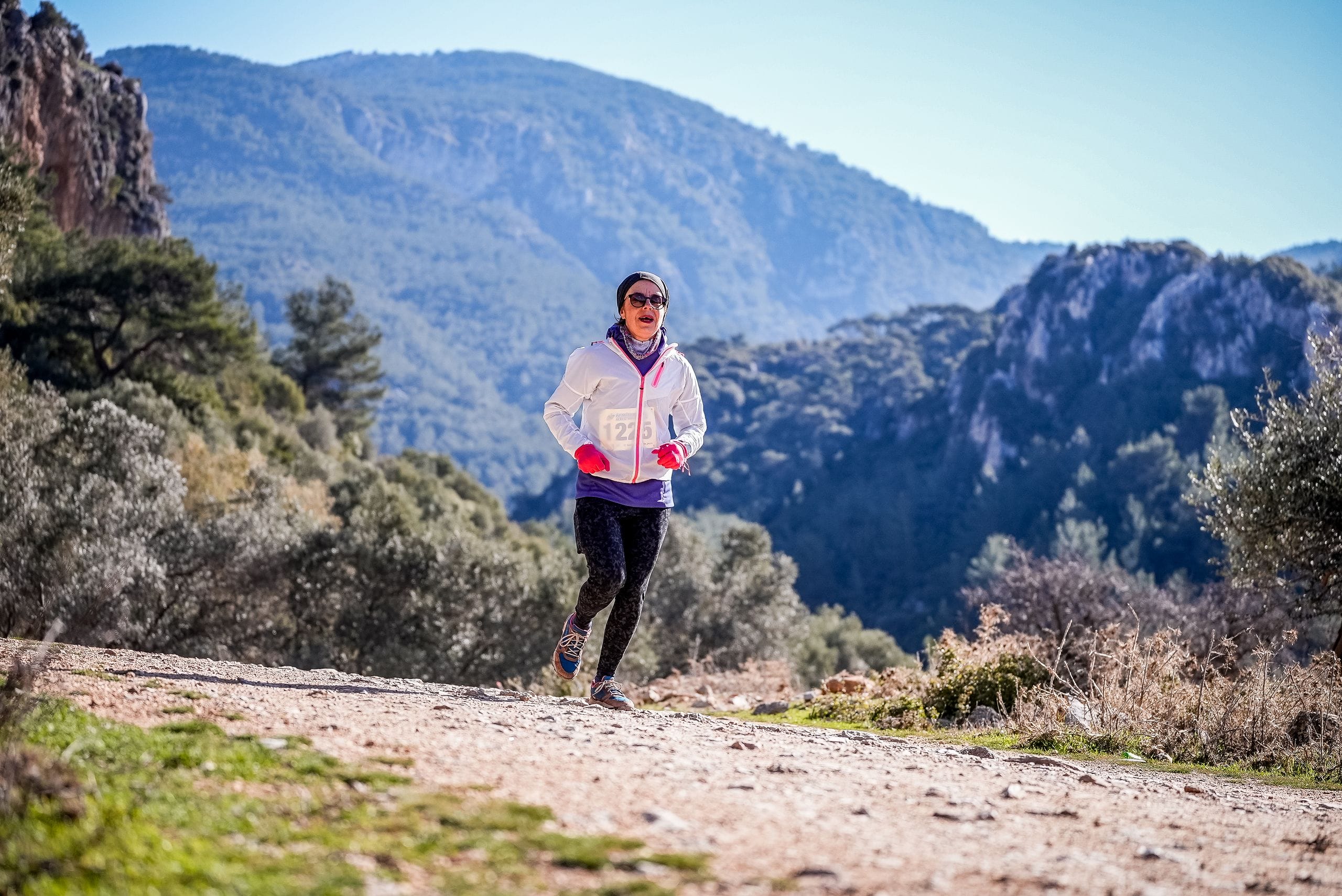
Distance running produces the most accumulated soft tissue damage of any endurance sport. A marathon recovery massage 24 to 48 hours after the finish is one of the highest-impact single interventions for cutting the multi-week functional decline that follows a big race.
Cyclists and Triathletes
Multi-hour efforts leave hip flexors, quads, and posterior chain heavily loaded, plus cervical and upper back tightness from the aero position. Triathletes add shoulder fatigue and run impact. One session covers all three segments.
Powerlifters and Competition Athletes
A meet means maximal neural and muscular output across multiple attempts, producing real CNS fatigue alongside the loading. Work 24 to 48 hours out restores tissue quality in the primary movers and releases the tension that builds in the support musculature.
Skiers and Outdoor Athletes
A hard day in the mountains leaves specific loading in the hips, knees, and lower back that accumulates across a season. Recovery work keeps that from compounding into the mid-season overuse injuries and chronic tightness.
Team Sport and Weekend Athletes
Tournament weekends, multi-day competitions, and training camps create the same loading as individual endurance events. Work between competition days, or after the last one, speeds return to normal function and cuts the injury risk of consecutive high-output days.
Anyone After a Hard Training Block
You don’t need to have raced. A brutal training week, a heavy lifting block, a high-volume ski week, any sustained high output benefits from intentional recovery work. The principles are the same whether or not there was a start line.
What to expect
Your Post-Event Session, Step by Step
Post-event sessions are gentler and more systematic than any other session we offer. Here’s how they flow.
Event Debrief
What you did, how the effort felt, what’s sore and where, and anything that felt off during or after. That sets the session focus and flags what we should watch.
Tissue Assessment
Quick palpation of the primary loaded structures to find unusual tenderness, swelling, or guarding that means more than normal soreness and calls for modified technique or referral.
Systematic Recovery Work
Light, flowing, circulatory technique through the loaded areas to promote clearance, restore range, and start fascial mobilization. Deliberately non-aggressive. You should leave feeling better, not sore.
Return-to-Training Guidance
Advice on training load this week, what to watch for, when to come back for maintenance, and whether anything found needs follow-up before you resume full training.
Ready to Recover Faster?
Post-event massage that gets you back to training sooner, tailored to what your body needs after competition. Book in about a minute.
How we approach it
Gentle. Systematic. Nothing Heroic.
Post-event massage is one of the most misunderstood sessions in sports care. Plenty of athletes expect, or ask for, deep tissue work right after a hard event on the logic that more intensity means faster recovery. The opposite is true. The inflammatory environment in post-event tissue makes deep pressure counterproductive in the first 24 to 72 hours. What the tissue needs is circulation, lymphatic drainage, and gentle mobilization, not structural change.
Our sessions use light to moderate effleurage and petrissage to drive circulatory and lymphatic flow, passive range of motion to restore movement without loading damaged tissue, and gentle myofascial work on the restrictions forming around overloaded areas. We avoid deep transverse friction, aggressive trigger point work, and sustained compression anywhere showing acute inflammation, all of which can extend the recovery timeline rather than shorten it.
Book it before you need it
The best time to schedule your post-event session is before your event, not the day after when you’re hunting for availability while walking down stairs sideways. Book your pre-event and post-event sessions together. Athletes who race regularly keep standing post-event slots through their race calendar, so recovery is built into the plan rather than figured out afterward.
Common questions
What Athletes Ask Before Booking
How Soon After My Event Should I Book?
24 to 48 hours is ideal. That lets the acute inflammatory response start settling while the tissue is still in the state where circulatory and lymphatic work has the most effect. Within a few hours of finishing, tissue is too inflamed for much beyond superficial work; a walk and hydration serve you better. Past 72 hours the specific recovery-phase benefits narrow.
Won’t Deep Tissue Speed Recovery More?
No, and this is the most common post-event mistake. Deep pressure in the first 48 to 72 hours increases tissue inflammation rather than reducing it. Your body is already running an acute inflammatory response, and aggressive mechanical stimulation amplifies it. Deep tissue belongs in the maintenance phase, not the day after a marathon.
I Don’t Feel Sore. Is It Still Worth It?
Yes, and that’s when it works best. Soreness lags behind tissue damage; by the time you feel it, the inflammatory process is well underway. Working in the 24 to 48 hour window catches the tissue at the point where you can still influence how the soreness develops. Athletes who do this consistently tend to get less sore over time, not more.
What About a Short Race, Like a 5K?
If you went genuinely hard, yes. The metabolic and tissue loading from maximal effort is significant regardless of distance. For a casual fun run at easy effort, probably not necessary unless something feels unusual. Go by how your body feels the next day.
Can I Combine It With My Maintenance Session?
Not ideally. The technique differs enough that combining them produces worse outcomes than either alone. A 30 to 45 minute post-event session 24 to 48 hours out, then a full maintenance session 7 to 10 days later once tissue has recovered, is the optimal sequence. If you only have time for one, book the post-event session.


“Sasha at Denver Sports Massage is awesome — she has been receptive to my needs and really listens to what I need to get me active again!”
Shelly Kurach · Google Review · Verified
“Outstanding service and professional as well. I was dealing with hip/quad pain for YEARS… after one session with Sarrut, I was able to squat pain free. I can’t even begin to tell you how amazing it felt! Thank you for everything!”
Yaël Saint-Armand · Facebook Review
“Amazing massage experience!! Jyoti really listens and provides great advice!”
Dan Kuroiwa · Facebook Review

THE FINISH LINE ISN’T THE END
How Fast You Recover Determines What Comes Next.
Your next training block starts from wherever this recovery leaves you. Intentional sports recovery massage in Denver, starting 24 to 48 hours after your event, is one of the highest-leverage things you can do for long-term development. It’s also the easiest to skip. Don’t skip it.
Not sure what service to book? Call us, we’ll help you figure it out.
Explore More
The Complete Race Week Cycle
Post-event recovery is one part of a complete athletic care approach. Here’s how the other pieces fit.
Pre-Event Prep
The other half of race week: activating prep that primes the nervous system without fatiguing the tissue you need to compete with.
Sports Massage
The maintenance foundation: tissue quality, injury prevention, and recovery support through the training block between events.
Sports Injuries
If the post-event assessment turns up something that needs more than recovery care, we treat it with the same clinical approach.
Acupuncture
Reduces systemic inflammation and supports immune recovery after major efforts, especially for athletes who race often or in multi-day events.
