

Scraping Massage in Denver
Break down restriction. Rebuild function.
Scraping massage, or IASTM (Instrument-Assisted Soft Tissue Mobilization), uses beveled stainless steel tools to find and treat the scar tissue, fascial restriction, and chronic tendon trouble that hands alone can miss. Our licensed therapists use it at our Greenwood Village clinic, minutes from anywhere in the South Denver metro.
IASTM at a glance
What it is
What is IASTM muscle scraping?
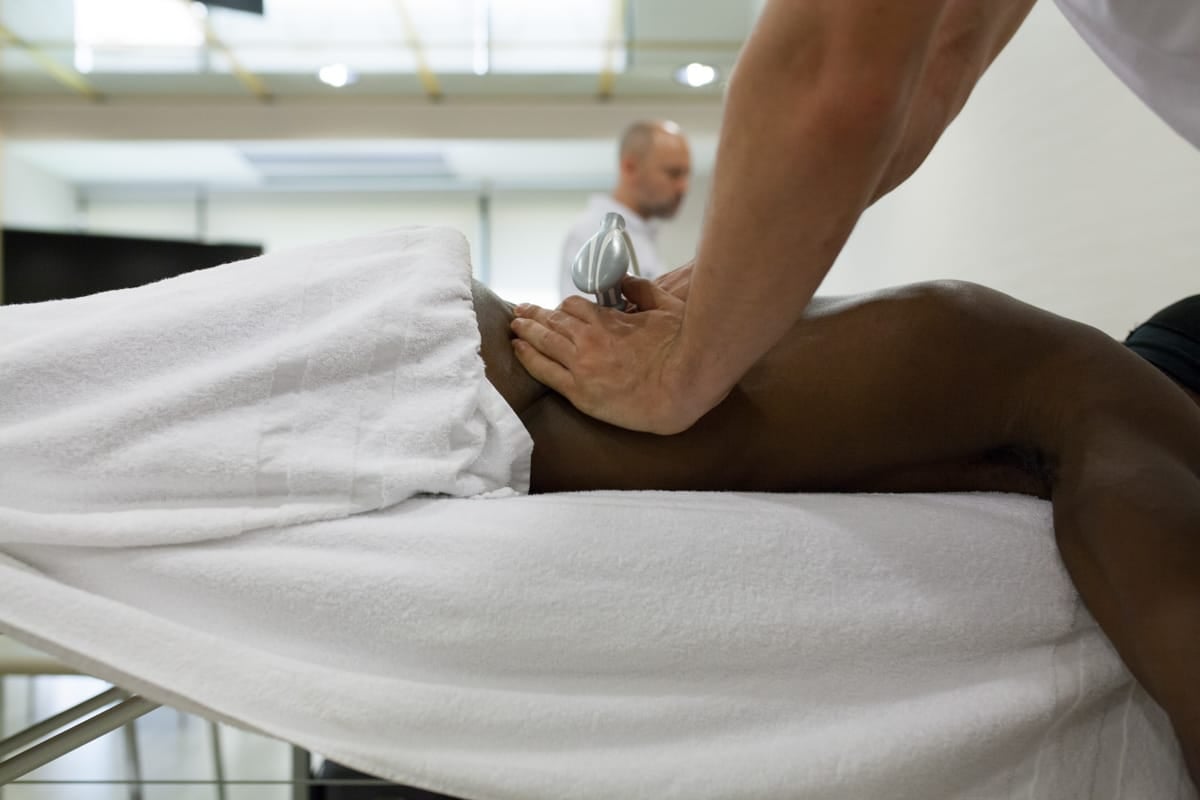
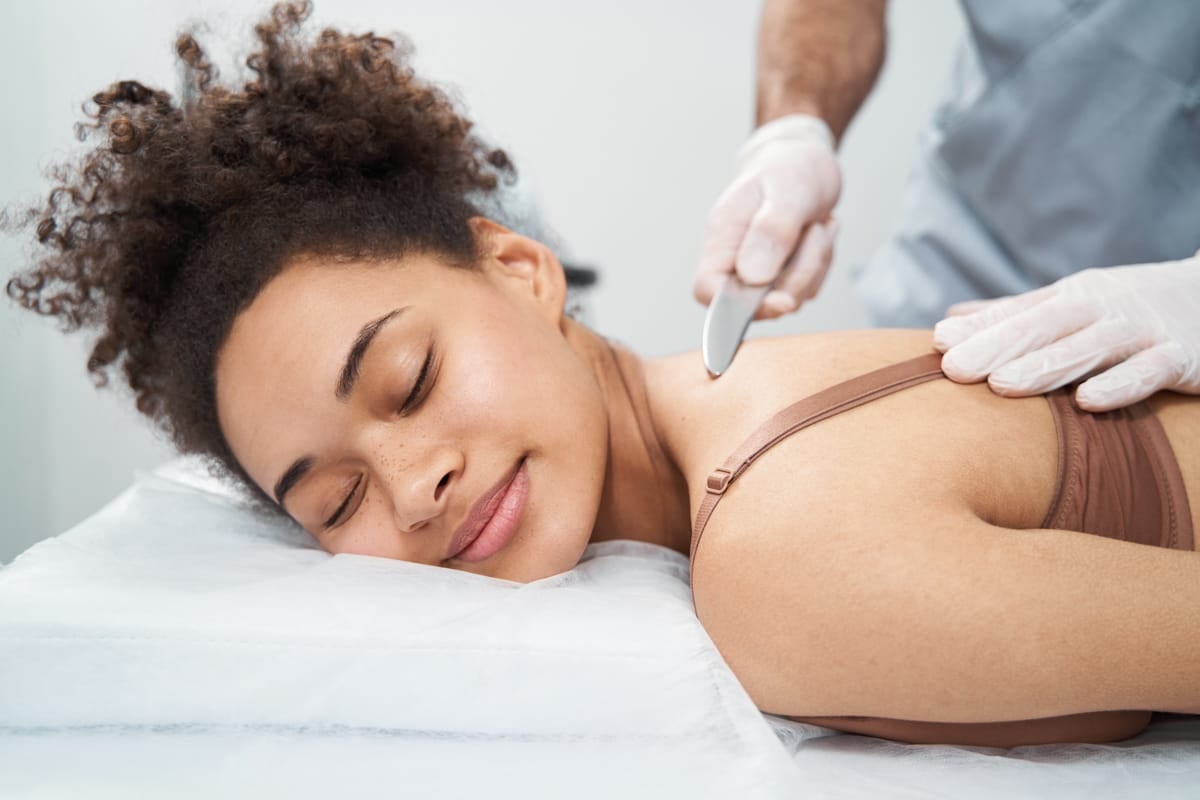
IASTM is a manual therapy technique that grew out of traditional gua sha and has been refined through modern sports medicine into a precise clinical tool. If you’ve had gua sha massage in an acupuncture setting, the instruments will look familiar. The sports-medicine version applies them with specific stroke angles and pressure.
Detection is the point. As the instrument glides over your skin, it amplifies the texture of the tissue underneath. Healthy tissue feels smooth. Scar tissue, fascial adhesions, and fibrotic bands feel grainy and resistant, which tells your therapist exactly where to work.
Why it lasts: Treatment strokes then apply a controlled stimulus at the restriction site, which can trigger a healing response that lays down new, better-organized collagen. That’s why scraping supports lasting change rather than short-term relief.
Who it helps
Muscle scraping benefits
Scraping is not a whole-body technique. It earns its place on specific, stubborn problems.
Chronic tendinopathies
Achilles, patellar, rotator cuff, and tennis or golfer’s elbow tendinopathies respond particularly well. Tendons have poor blood supply and remodel slowly on their own; targeted stimulation can help jumpstart that process.
Post-surgical scar tissue
Surgical scars restrict movement at the surface and through deeper fascial connections. Applied to healed scars, typically 3 to 6 months post-op and with physician clearance, scraping helps break up adhesions and restore normal glide.
Overuse and postural strain
IT band syndrome, shin splints, and the tight chest and neck tissue that builds from long desk hours all involve fascial changes scraping can find and treat at the source.
What to expect
What to expect in a scraping massage session
Assessment
Movement screening and palpation identify the target areas and what’s going on in the tissue.
Scanning
Light instrument strokes map the region and pinpoint the sites that need treatment.
Treatment
Targeted strokes at the identified sites. You’ll feel a concentrated ache at restriction points; intensity stays calibrated to your tolerance throughout.
Integration
Movement, stretching, and light manual work reinforce the new tissue mobility, plus aftercare guidance for the next 48 hours.
Start with an assessment
Get a treatment plan built around your body, your training, and your schedule.
How we use it
How we use IASTM in Denver
If you’re coming in for a specific tendon or scar issue, mention it when you book.
Detection comes first
Your therapist scans the target region with light strokes, mapping tissue quality before treating anything.
Precision over coverage
Scraping healthy tissue produces discomfort without benefit, so precision matters more than coverage.
Included, never an add-on
You won’t book scraping as a separate add-on here. IASTM is folded into sports massage, orthopedic massage, or deep tissue sessions whenever the assessment calls for it, at no extra charge.
Common questions
Scraping therapy questions, answered
What does scraping do?
Scraping creates a controlled mechanical stimulus at sites of scar tissue or fascial restriction. This can prompt the body to replace disorganized scar tissue with properly aligned collagen, helping restore normal movement between tissue layers. It also works as a detection tool, revealing restricted areas palpation would miss.
Does muscle scraping hurt?
You’ll feel a deep, specific ache at restriction sites that most clients call uncomfortable but productive. Healthy tissue feels very different under the tool. Some soreness for 24 to 48 hours afterward is normal.
How many sessions will I need?
For tendinopathies, 4 to 8 sessions spaced 5 to 7 days apart is typical. Scar tissue and fascial restriction usually take 3 to 6. Your therapist will give you a specific estimate after seeing how your tissue presents.
Is IASTM the same as gua sha or Graston Technique?
They’re close relatives. Gua sha is the traditional technique IASTM evolved from, and Graston is a branded IASTM system with proprietary tools. Our therapists use equivalent instruments and evidence-based protocols with the same mechanism.


“Sasha at Denver Sports Massage is awesome — she has been receptive to my needs and really listens to what I need to get me active again!”
Shelly K. · Google Review
“Absolutely the best! Listened to my situation and was logical in her approach to treating me. Went well beyond what I anticipated to help me understand the nature of my ailments and what can be done to help me with practical exercises.”
Dave C. · Google Review

Ready to work on that stubborn restriction?
If massage alone hasn’t resolved a tendon problem or scar tissue restriction, scraping may be the missing piece. It’s included in your session when clinically indicated.
Not sure what service to book? Call us, we’ll help you figure it out.
Explore more
You might also find useful
Orthopedic Massage
Assessment-driven sessions where IASTM findings guide treatment.
Tennis & Golfer’s Elbow
One of scraping’s strongest indications.
Post-Surgical Recovery
Scar tissue work at the right stage of healing.
