

Acupuncture for Chronic Pain
Pain is a signal. Acupuncture changes what the signal says.
Chronic pain is rarely just a tissue problem anymore. Acupuncture for chronic pain works on the nervous system itself, helping quiet the amplified signals that keep hurting long after the original injury has healed. At our Greenwood Village clinic in the South Denver metro, licensed acupuncturists build each treatment plan around your specific pain pattern, from a stubborn low back to nerve pain your medication has not resolved.
Chronic pain at a glance

What It Addresses
How Acupuncture for Chronic Pain Works
Pain is not a direct readout of tissue damage. It is an output the brain produces in response to threat signals, and in chronic pain the nervous system has learned to amplify those signals even after the tissue has healed. Researchers call this central sensitization, and it is a big part of why chronic pain resists purely local treatment. The problem has moved from the muscle or joint into the nervous system.
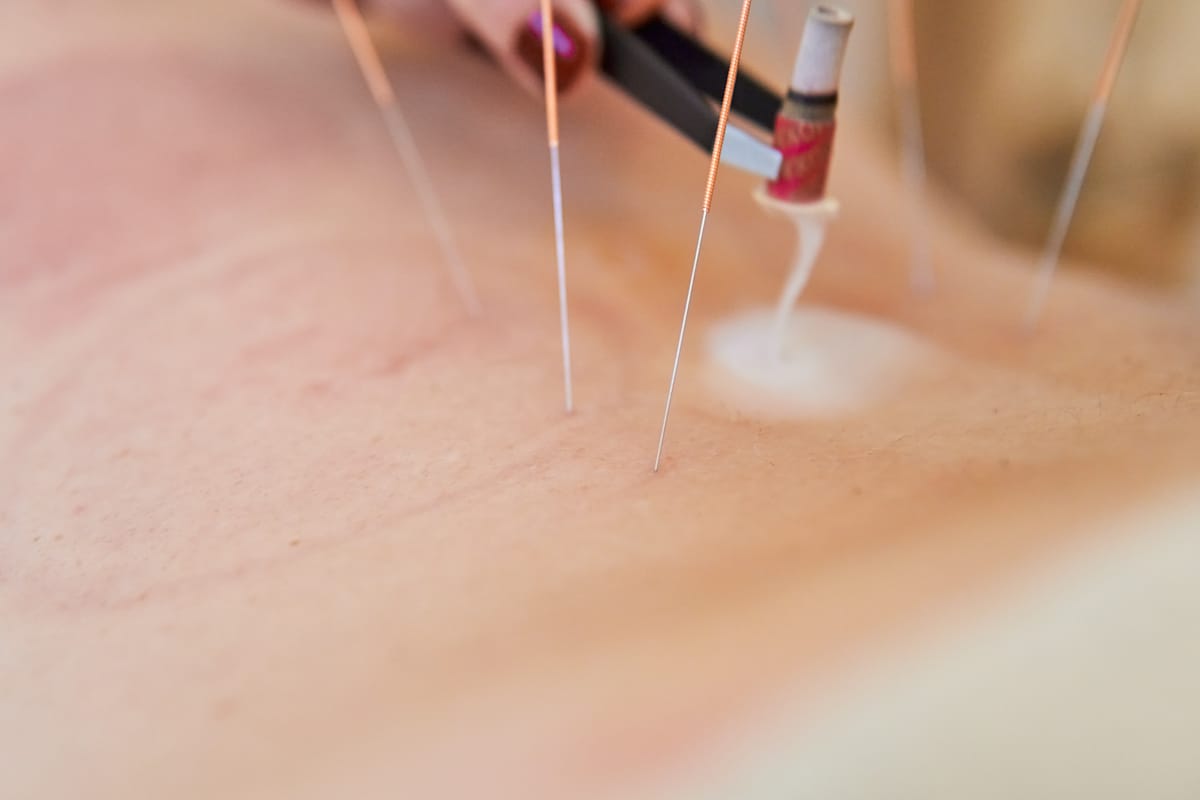
Acupuncture addresses pain at several levels at once. At the needling site, it produces local anti-inflammatory effects and can inhibit pain signal transmission. At the spinal cord, it activates inhibitory pathways that help turn down signal amplification. And systemically, it stimulates the release of endorphins and enkephalins, the body’s own pain-relieving chemistry, without building tolerance or dependency the way medication can.
The Chinese medicine framework adds precision: the quality of your pain, fixed or moving, worse with cold or better with warmth, points to a pattern, and each pattern calls for different point selection.
Who It Helps
The Chronic Pain
We Treat Most
Back Pain
Chronic low back pain has one of the strongest evidence bases in acupuncture research; systematic reviews show benefit beyond sham treatment and usual care. It is also the most common reason Denver clients book acupuncture with us.
Neck Pain
Desk work, long commutes, and old whiplash injuries keep neck pain stubbornly common. Acupuncture for neck pain combines local points with distal points that help release the guarded muscles keeping the area irritated.
Shoulder Pain
Rotator cuff irritation and frozen shoulder both respond well, as do the overuse injuries that come with lifting and throwing sports. Acupuncture for shoulder pain also pairs naturally with the clinical massage work available under the same roof.
Nerve Pain and Headaches
Burning or shooting neuropathic pain often responds to electroacupuncture protocols. Migraine prevention has evidence comparable to preventive medication in head-to-head trials.

How We Approach It
A Protocol Matched to
Your Pain Pattern
Every course starts with a thorough pain history: location, quality, duration, what aggravates or relieves it, and what you have already tried. Bring any imaging, specialist reports, or medication lists to your first visit.
For most chronic pain, the initial course is weekly sessions for six to ten weeks, tapering as your pain stabilizes. Recent-onset pain tends to move faster, while pain that has been present for years usually needs a longer course. Electroacupuncture is added when a presentation needs stronger analgesic stimulation.
Acupuncture complements medical pain management rather than replacing it. We communicate with your physician or pain specialist on request, and any medication changes stay with your prescribing doctor.
What to Expect
Your First Session,
Step by Step
Pain History Intake
We start with your full story: pain location and quality, prior treatment, imaging, and current medications, plus a TCM pulse and tongue assessment.
Pattern Diagnosis
Your acupuncturist identifies the pattern driving the pain, which guides both local and distal point selection. No generic protocols.
Treatment
Needling with local and distal points, with electroacupuncture added when needed. Many clients notice meaningful pain reduction during or right after the first session.
Course Management
Pain levels are tracked session to session, and treatment shifts from symptom relief toward the pattern that let the pain persist.
Your first session includes a full assessment and treatment.
Booking takes about a minute. We are open seven days a week, including evenings and weekends, with same-week appointments available and HSA/FSA accepted.
Why Us
Why Denver Sports Massage
Acupuncture here is part of an integrated clinical practice, not a standalone service. Our licensed acupuncturists hold advanced credentials in Chinese medicine and work alongside a clinical massage team, so a complex case can get nervous-system treatment and targeted tissue work in one coordinated plan. Every session begins with assessment. Our 4.9-star rating across 350+ Google reviews reflects how seriously we take results.

Dr. Ryan Taves
D.Ac, L.Ac, Dipl. Ac. (NCCAOM)®, BA Health Psychology, NPTI-PFT, Herbal Medicine & Integrative Health Certification
FAQ
Chronic Pain Acupuncture FAQs
How Many Sessions Until I Notice a Difference?
Most clients with musculoskeletal pain notice meaningful reduction within three to five sessions. Neuropathic pain and long-standing chronic pain typically take six to eight before significant change.
Can Acupuncture Replace My Pain Medication?
No, and we never advise unsupervised medication changes. What acupuncture can do is reduce pain intensity enough that your medication needs decrease over time, managed with your prescribing physician.
Is Acupuncture for Chronic Pain Covered by Insurance?
Some plans cover acupuncture for specific conditions, particularly low back pain since Medicare expanded coverage in 2020. Coverage varies by plan and diagnosis, so check with your insurer. We provide documentation for claims on request.
What if My Pain Has a Structural Cause?
Conditions like advanced osteoarthritis respond partially. Acupuncture can reduce the pain significantly, but it cannot reverse structural change, and we will tell you honestly what to expect.

Ready to Get Ahead of
Your Chronic Pain?
Not sure what service to book? Call us, we’ll help you figure it out.
