

Sports Injury Massage in Denver
Get back to training. Stay there.
Sports injury massage in Denver for athletes who want more than rest and ice. IT band syndrome, rotator cuff strain, hamstring pulls, shin splints, the overuse injuries that show up right when training is going well. At our Greenwood Village clinic we assess what’s driving the injury, then treat the tissue and the cause together, so you return to full training with less chance of a repeat.
Sports injuries at a glance
Why injuries come back
Why sports injuries keep coming back
“Overuse injury” is a misleading name, because it implies the fix is simply to use less. Most overuse injuries happen because load is distributed unevenly across the body, not because volume is too high. A tight hip flexor changes the mechanics of every stride. A stiff thoracic spine changes how the shoulder loads overhead. Repeat that pattern across thousands of repetitions and the weakest link gives out.
That is why treating only the sore spot rarely holds. An irritated IT band usually traces back to hip mechanics, so foam rolling brings temporary relief at best. Rest works the same way. Time off lets inflammation settle, but it does not change the tissue quality or movement pattern that produced the injury. Train again on the same mechanics and you often get the same result.
What we treat
The injuries we see most often
What to expect
Athletic injury treatment
starts with assessment
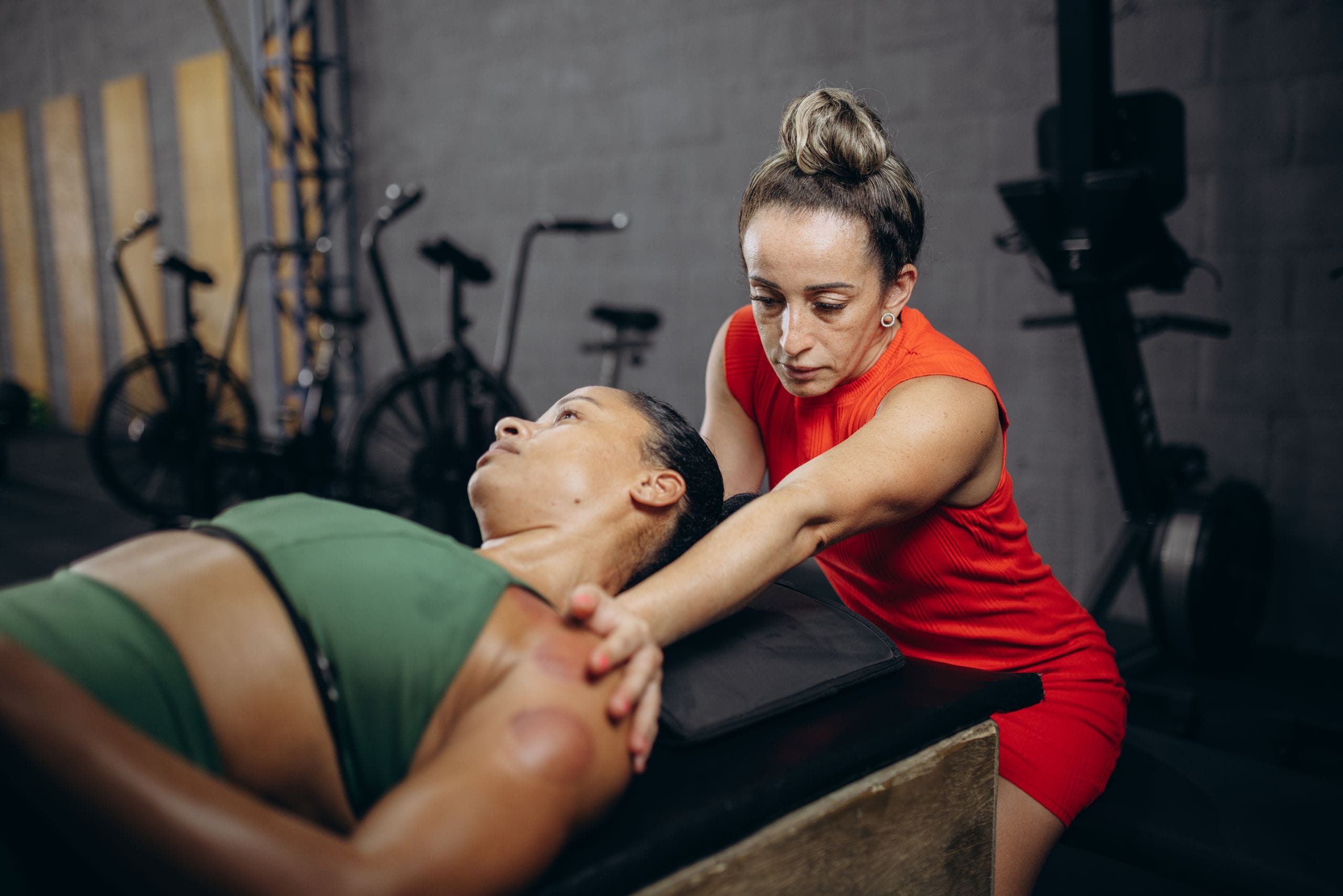
Every sports injury session follows a structured clinical process, because the assessment determines everything about the plan.
Injury and Training History
How it started, what training you were doing, what helps, what aggravates it, and your upcoming event schedule.
Sport-Specific Assessment
Movement screening and kinetic chain evaluation for your sport, identifying the injured structure, the injury phase, and the mechanics feeding it.
Phase-Appropriate Treatment
Deep tissue and sports massage, myofascial release, neuromuscular therapy, and acupuncture where indicated. Acute injuries get different work than chronic patterns, and we never apply deep pressure to acutely inflamed tissue.
Load Guidance and a Plan
What you can keep doing this week, what to avoid, a realistic session count, and clear criteria for progression. You leave with a plan, not “rest and see how it feels.”
Most athletes do not need to stop training entirely. Adjusting volume and intensity alongside hands-on treatment usually beats full rest for overuse injuries. If you’re working with a physical therapist, chiropractor, or sports medicine doctor, bring their notes. We coordinate our massage and acupuncture work with your rehab plan rather than duplicating it.
Racing soon?
Tell us your event date when you book. Treatment intensity and sequencing change depending on whether you have four weeks or four months.
Common questions
What athletes ask
about sports injury massage
Do I need to stop training while I’m being treated?
For most overuse injuries, complete rest is unnecessary and often counterproductive. We give specific guidance instead: what you can train through, what to avoid, and at what volume, so you stay active while we address the underlying drivers.
I have a race in six weeks. Can you still help?
Yes, and the timeline changes the approach. With a race close, we prioritize symptom management and safe training continuation, then address the remaining mechanical contributors after your event. Mention the race date when you book.
How is this different from physical therapy?
We don’t provide physical therapy. PT is exercise-based rehabilitation; our work is clinical massage and acupuncture focused on tissue quality, fascial restriction, and trigger point patterns. Many athletes use both. If you have a PT, we’ll coordinate with their program.
How many sessions until I’m back to full training?
Acute soft-tissue injuries with a clear mechanical driver often respond within 4–6 sessions, while chronic overuse patterns typically take 6–10. You get a specific estimate after your first assessment.

Ready when you are
Ready to get back to full training?
The injury already happened. What happens next is up to you. Your first sports injury massage session includes a full assessment, hands-on treatment, and a realistic timeline for return to sport.
Not sure what service to book? Call us, we’ll help you figure it out.
Hurt within the last 72 hours? Call before booking so we can advise what’s appropriate for an acute injury.
Helpful links
You might also find useful
Sports Massage
Athletic soft-tissue care between injuries: maintenance, pre-event prep, and post-event recovery.
Shoulder Pain
The most common upper-body athletic presentation, treated with the same kinetic chain approach.
New Clients
What your first visit looks like and how to get the most out of it.
