

Assisted Stretching & PNF in Denver
The flexibility method that actually works.
Assisted stretching in Denver, guided by clinicians trained in PNF. By working with your nervous system instead of against it, a single session can reach range that months of solo stretching haven’t.
Quick facts
What is it?
Your Nervous System Sets Your Flexibility Limit.
Proprioceptive neuromuscular facilitation, or PNF, starts from a simple fact: flexibility is not just a property of your muscles. It is mostly a setting held by your nervous system. The stretch reflex protects muscles from lengthening too far or too fast, and your usable range of motion ends where that reflex kicks in, well before the tissue’s true limit.
PNF stretching temporarily quiets that reflex through two mechanisms. When you contract a muscle isometrically near its stretched limit, tension sensors in the tendon inhibit that same muscle, letting it lengthen further (autogenic inhibition). Contracting the opposing muscle inhibits the target a second way (reciprocal inhibition). A skilled clinician uses both.
Why the gains hold: Repeat the cycle and the nervous system starts to accept the new length as normal. That is why PNF gains hold better than static stretching. Most clients see a 10–20% improvement in range for a restricted muscle in a single session, and regular sessions help make it last.
Who it helps
Who Assisted Stretching Helps
Athletes With Restricted Range
Restricted hips, hamstrings, thoracic rotation, shoulder external rotation, or ankle dorsiflexion see the most dramatic improvements. Even well-conditioned athletes usually carry asymmetries that PNF can address quickly.
Desk Workers
Tight hip flexors, pecs, and neck extensors from sustained sitting often improve more in one focused session than in months of independent static stretching.
Post-Injury Range Restoration
PNF helps restore range after an injury has healed, when the nervous system is still guarding tissue it no longer needs to protect.
Plateaued Flexibility Practice
If your yoga or flexibility practice has stalled, the limitation is usually neurological rather than structural, and that is the component PNF addresses.
Swimmers, Cyclists, and Overhead Athletes
Shoulder and thoracic restriction in swimmers, hip mobility in cyclists, and overhead range in throwing athletes all limit performance in ways PNF can measurably improve.
Pre-Session Mobility Preparation
Applied at the start of a session, PNF opens range that a passive warm-up doesn’t reach and clarifies which restrictions are neurological rather than structural.
What to expect
What to Expect, Step by Step
Movement Screening
Your clinician measures active and passive range in the target areas and sorts the neurological restrictions, which respond immediately to PNF, from the structural ones that need manual work.
Target Muscle Setup
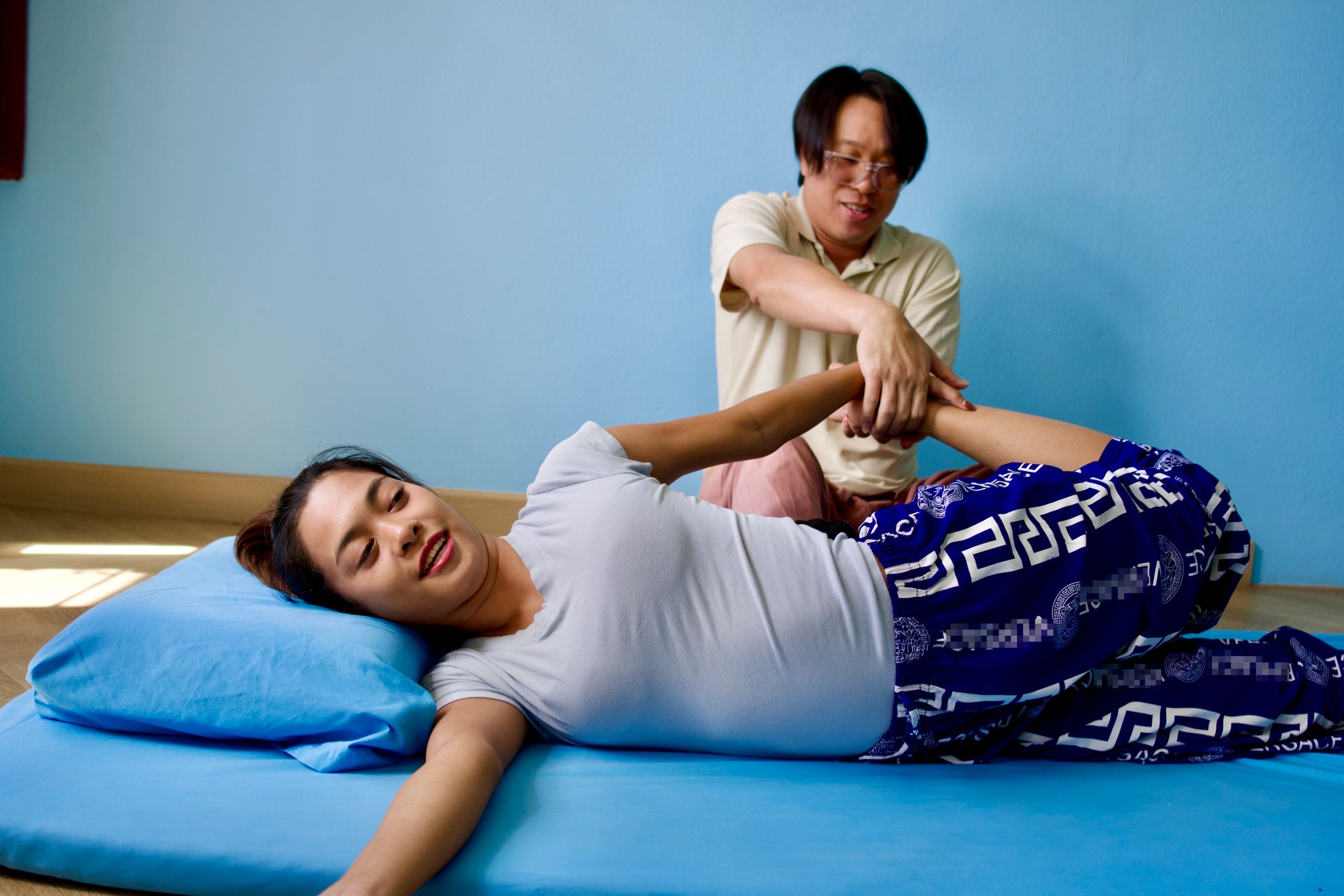
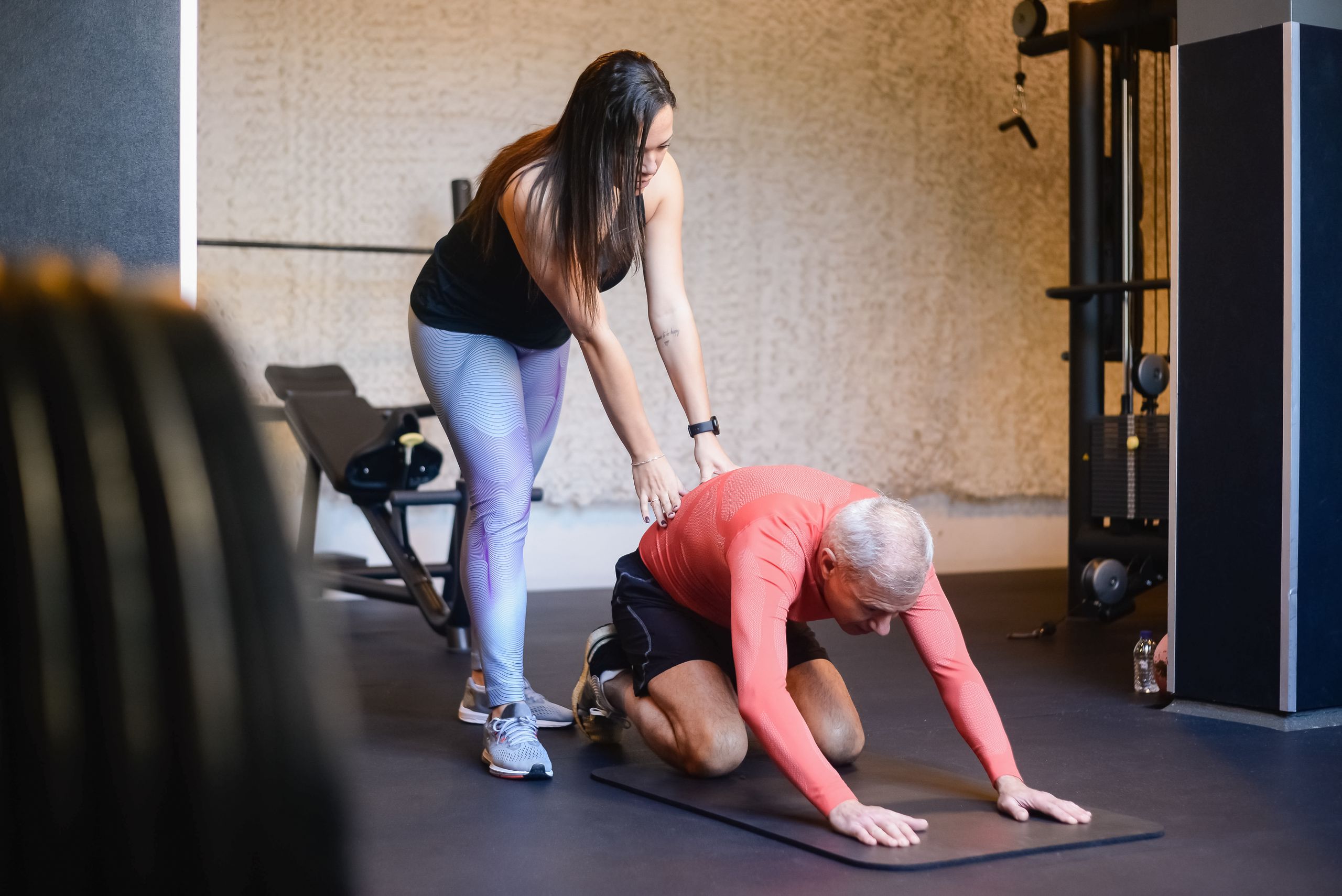
The muscle is moved passively to its comfortable end range, with your clinician positioned to provide steady resistance and keep your alignment correct.
Contract-Relax Cycles
You contract against resistance for six to ten seconds, relax completely, and your clinician takes the muscle further. Repeated three or four times per muscle.
Reassessment and Integration
Range is re-measured, and you will usually notice the difference immediately. Reinforcement exercises help your nervous system keep the new range.
Ready to Actually Gain Range of Motion?
PNF produces measurable flexibility gains in a single session. Your first visit includes assessment and targeted work on the restrictions holding you back.
How we apply it
Contract, Relax, Move Further
The classic sequence is contract-relax. Your clinician takes the target muscle to the end of its comfortable range. You contract it against their resistance for six to ten seconds, then fully relax while they guide the muscle into its new end range. The cycle repeats three or four times, each pass reaching a little further as your nervous system accepts the new length. For stubborn areas, especially the hip complex, the CRAC variant adds a contraction of the opposing muscle for extra effect.
Timing and resistance matter, which is why a trained clinician gets results a stretching partner cannot. The contraction must stay truly isometric, and the re-stretch has to land in the brief window after you relax, before the reflex re-establishes itself.
How It Fits Into Your Session
PNF works best at the end of a massage, when tissue is warm and your nervous system has already settled. Sports massage and stretching together treat both sides of mobility: manual work addresses tissue quality, PNF resets the neurological limit. You can also book a focused 30–60 minute stretch therapy session for specific restrictions. Mention your mobility goals when booking.
Common questions
Common Questions About PNF Stretching
Is PNF the Same as Regular Stretching?
No. Static stretching pushes against the stretch reflex; PNF uses controlled contractions to quiet it temporarily. The range you reach feels different: further, less uncomfortable, and longer lasting.
Will It Hurt?
You will feel a strong stretch at end range and the contractions take effort, but pain is not the goal or the typical experience. The reflex threshold is being modified, not forced.
How Long Do the Gains Last?
Gains from one session often persist for hours to days. With weekly or bi-weekly sessions and some active practice between them, the nervous system consolidates the new setpoint and the gains become durable.
Can PNF Help With Chronic Pain?
Often, yes. Chronic pain is frequently maintained partly by involuntary protective muscle guarding, which PNF can help reduce, especially when combined with massage. Your clinician will assess whether your pattern fits.


“Outstanding service and professional as well. I was dealing with hip/quad pain for YEARS… after one session with Sarrut, I was able to squat pain free. I can’t even begin to tell you how amazing it felt! Thank you for everything!”
Yaël Saint-Armand · Facebook Review
“Sasha at Denver Sports Massage is awesome — she has been receptive to my needs and really listens to what I need to get me active again!”
Shelly Kurach · Google Review · Verified
“Absolutely the best! Listened to my situation and was logical in her approach to treating me. Went well beyond what I anticipated to help me understand the nature of my ailments and what can be done to help me with practical exercises.”
Dave Conner · Google Review · Verified

ACCESS YOUR FULL RANGE
Ready to Move Past the Plateau?
If a movement restriction is limiting your training, or your flexibility has stalled no matter how much you stretch, a guided assisted stretching session will show you what your body has been holding in reserve.
Not sure what service to book? Call us, we’ll help you figure it out.
Explore More
Related Services
Sports Massage
Manual work addresses tissue quality; PNF resets the neurological limit.
Myofascial Release
Releases structural fascial restriction, PNF’s natural partner.
Injury Prevention
Keeping functional range in key areas is one of the best prevention strategies there is.
General Wellness
A periodic mobility session translates to better movement quality in everything you do.
